
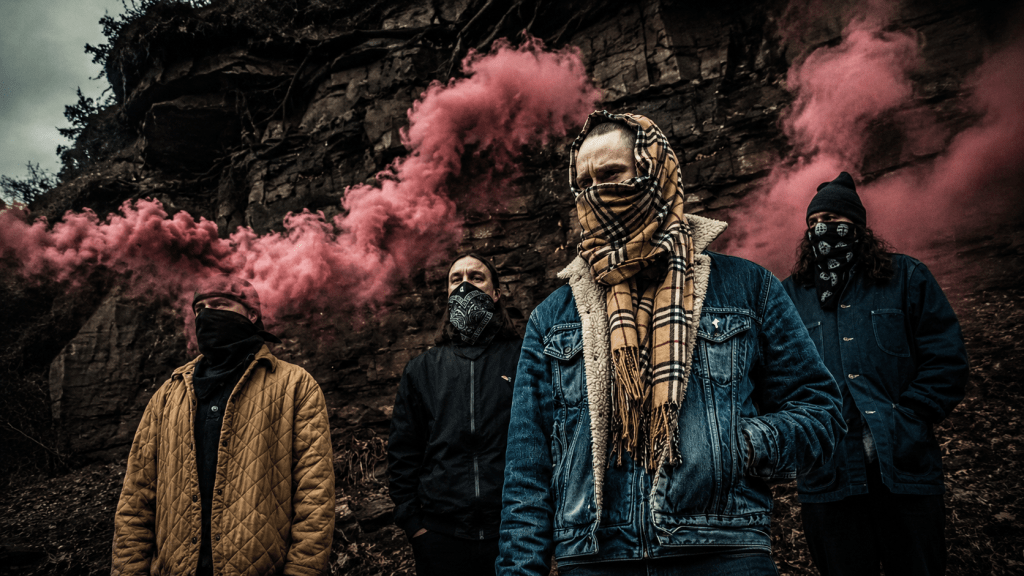
WU LYF were not supposed to become a comeback story.
That was never how the myth worked. They were meant to remain sealed in amber, or maybe something less polite than amber: smoke, sweat, church dust, a bootprint on a flyer left outside a Manchester venue after everyone had gone home. One album. One fire. One split. No heritage tour, no deluxe anniversary package, no polite return to remind everyone that the reckless young things had become tasteful middle-aged custodians of their own legend.
And yet here they are.
Fifteen years after Go Tell Fire to the Mountain, WU LYF have returned with A Wave That Will Never Break, their second album and first since 2011. In another band’s hands, that sentence would arrive dressed in soft-focus nostalgia. The boys are back. The cult heroes return. The lost classic gets a sequel. The streaming platforms prepare the curated playlist: “Indie Sleaze But Make It Spiritual.”
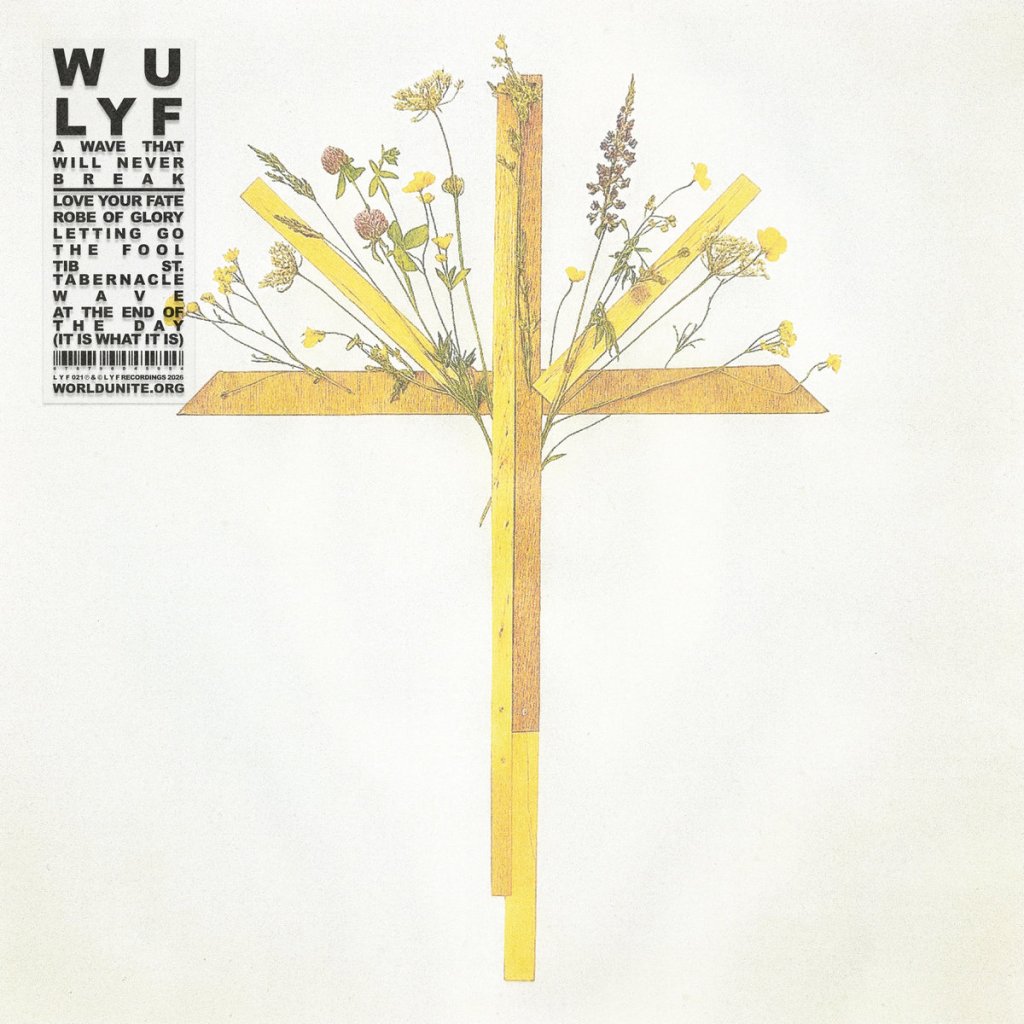
WU LYF, naturally, have made it stranger than that.
The new record does not feel like a band re-entering the music industry. It feels like a band circling the building, checking the exits, refusing the lanyard, then setting up their own tent in the car park. The music is back, yes, but so is the old refusal. The same impulse that once made them reject the standard route through label attention, press exposure and indie careerism now seems aimed at the platform age. Spotify is not just absent from the story. Its absence is part of the story.
WU LYF have returned, and they still don’t want to belong to anyone.
For anyone who missed the first flare, WU LYF were a Manchester four-piece who arrived at the start of the 2010s carrying the faintly ridiculous, faintly magnificent full name World Unite Lucifer Youth Foundation. They sounded like a gang trying to sing hymns after escaping a burning youth club. Their songs had church organ, huge drums, ringing guitar lines and Ellery Roberts’ voice, a raw-throated bark that seemed less sung than dragged through weather.
They were routinely called mysterious, but mystery was never quite the point. Mystery was the lazy word outsiders used when a band declined to explain itself on command. WU LYF did not offer the usual parcel of biography, genre tag, press photo and agreeable quote. They made symbols, missives, slogans, objects, videos, their own little weather system. Their debut, Go Tell Fire to the Mountain, recorded in a church and released in 2011, sounded accordingly cavernous, half-ruined and alive.
It was a record that behaved as though ordinary indie rock had been forced to kneel down and remember it once wanted transcendence. “Heavy pop” was the phrase that clung to them, but even that felt too tidy. WU LYF were part sermon, part football chant, part art-school uprising, part teenage dare that had somehow grown organs and a rhythm section.
What made them compelling was not merely the sound. It was the refusal wrapped around it. At a time when new bands were expected to feed the blog machine with content, interviews, branding and constant access, WU LYF acted as if attention itself was contaminated. They were not anti-audience. If anything, they were obsessed with communion, with building a circle of believers. But they wanted that relationship to be direct, strange, self-made. They wanted to build a world, not merely enter a market.
That is why the 2012 ending mattered. It did not arrive as a mature artistic pause or a quiet hiatus. It landed like a flare fired into the band’s own mythology.
In November 2012, Ellery Roberts appeared to announce his departure through a YouTube upload connected to the track “T R I U M P H.” Reports at the time framed it as a rupture: Roberts was done, the band’s Facebook page disappeared, and the future of WU LYF seemed to collapse almost instantly. The line that stuck, inevitably, was brutal in its simplicity: WU LYF was dead to him.
There is always a danger in over-writing a band split, as if a group of young men ending a creative project must be treated like the fall of a city-state. But WU LYF had invited scale. Their language was all fire, blood, crowns, angels, youth, world-building. When they broke, it was never going to feel administrative. The implosion became the last chapter of the record. The silence became part of the sound.
Most bands fade by continuing too long. WU LYF became more powerful by disappearing before anyone could domesticate them.
In the years that followed, the members moved into other projects and other lives. Roberts would later make music through Lost Under Heaven. Others surfaced elsewhere. Fans did what fans do when an object is removed from circulation: they polished it with longing. Go Tell Fire to the Mountain became less like a debut album and more like a site of pilgrimage. It could not be complicated by a weak follow-up, softened by a reunion cycle or trapped in the amber of an endless anniversary economy. It just sat there, still smoking.
Which is why A Wave That Will Never Break arrives carrying a strange burden. It is not only a new album. It is an argument with a myth.
The fact of its existence is already dramatic enough. But the record itself does not sound like a museum piece. It does not chase whatever version of “indie” is supposed to be current in 2026. It does not attempt to disguise the years. There is an older energy here, a more open one. The scale remains, but the fog has shifted. Where the debut often sounded like a transmission from behind a wall, the new record feels more willing to stand in the room.
That does not mean it has become ordinary. WU LYF still reach for the oversized gesture. They still sound allergic to understatement. They still treat rock music as if it might, under the right conditions, become a communal emergency. But A Wave That Will Never Break carries a different temperature. The fire is not smaller. It is better tended.
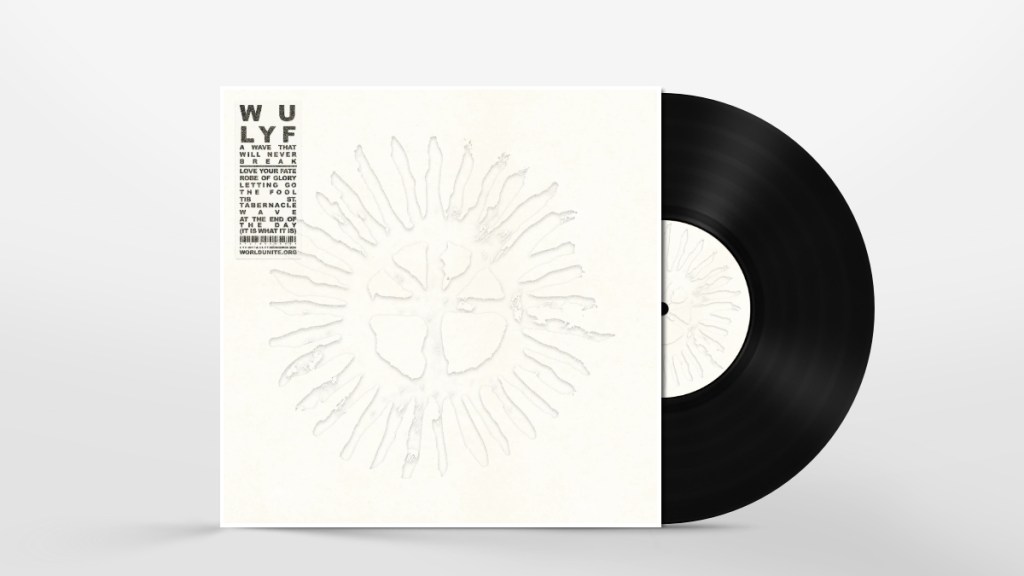
The track titles alone suggest a band returning not with apology, but with a new vocabulary of acceptance and endurance: “Love Your Fate,” “Robe of Glory,” “Letting Go,” “The Fool,” “Tib St. Tabernacle,” “Wave,” and “At the End of the Day.” That sequence reads like a sermon delivered by someone who has finally learned to stop mistaking damage for destiny. The title, too, is doing plenty of work. A Wave That Will Never Break suggests motion without collapse, force without surrender, the refusal to resolve into wreckage.
But the more interesting part of this return may be how the album has been released. WU LYF are not simply back with songs. They are back with an infrastructure.
In 2011, their independence meant resisting the label machine, the hype machine, the interview machine, the strange hunger of an industry that wanted to name them, package them and sell back their own mystique. In 2026, the machine has a different face. It smiles through an app. It calls itself access. It calls itself discovery. It turns songs into mood furniture, artists into data trails and listening into a frictionless fog of tiny payments and algorithmic nudges.
WU LYF’s new record has been kept away from the major streaming platforms, with the band instead directing listeners towards their own WORLDUNITE / L Y F ecosystem, physical copies and more direct channels. This is not incidental. It feels like the 2026 version of their original gesture. Back then, they were trying to build a community outside the expected industry pipeline. Now, they are trying to do something similar outside the great streaming aquarium.
It would be easy to turn this into a simple anti-Spotify sermon. The economics of streaming are grim, and plenty of artists have already explained why the model leaves musicians dependent on scale, playlisting and constant visibility. But WU LYF’s refusal feels broader than an argument over royalties. It is about meaning. What happens to a band built on ritual, scarcity and direct connection when music has been trained to behave like tap water?
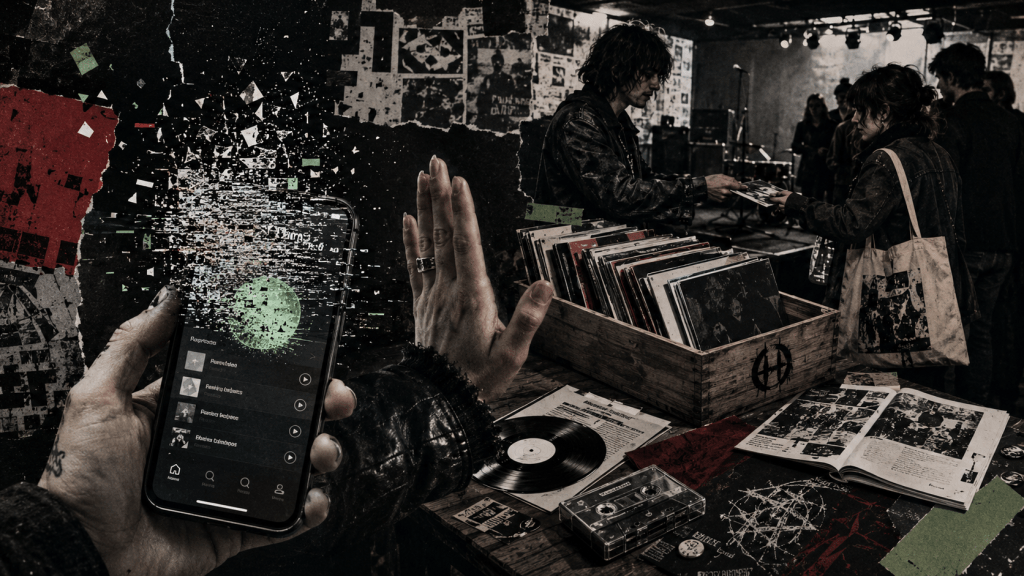
Spotify is designed to make everything available and, in doing so, to make everything slightly less present. A song appears, disappears, gets skipped, gets saved, gets recommended, gets flattened into context. WU LYF were never built for that. Their power depended on friction: finding the thing, entering the world, accepting the terms, deciding that this ridiculous little republic of symbols and smoke was worth your belief.
The funniest and most telling detail of the rollout is “The Fool.” A version appeared on Spotify, but not quite in the way a listener might expect. Rather than simply making the proper single available there, WU LYF turned the platform into a joke, a decoy, a signpost pointing back toward the place they actually wanted you to go. That gesture says more than a thousand press-release paragraphs. The platform gets the prank. The believers get the record.
There is a danger, of course, in romanticising all this too much. Not every artist can afford to leave the platforms. Not every fan wants another login, another membership, another tiny gated village on the internet. Streaming won because it is easy, and ease is a ferocious drug. Direct community is harder. It asks more of everyone. It asks the artist to build and maintain something. It asks the listener to step outside the stream and make a deliberate act.
But perhaps that is precisely why WU LYF’s return feels so timely. The old internet promised that artists could go direct. The platform internet quietly replaced that promise with dependency. Build your audience here. Release your work here. Watch your numbers here. Pay attention to the dashboard. Feed the format. Feed the feed. The relationship between artist and audience is constantly mediated by companies that insist they are not in the way while standing in the doorway with both hands out.
WU LYF’s model will not be the answer for everyone. It may not even be the final answer for WU LYF. But it is an answer, and in 2026 that matters. It is a reminder that distribution is not neutral. Where music lives changes how we hear it. How we reach it changes what we think it is worth.
That has always been the best part of WU LYF, even when they were at their most combustible. Beneath the myth, the slogans and the smoke, they understood that music is not only sound. It is a social arrangement. It is who gathers, who pays, who speaks, who owns the channel, who decides the terms of belonging.
In 2012, the project seemed to collapse under the weight of its own intensity. In 2026, that intensity has returned with more shape around it. The band are older. The world is worse. The internet is uglier. The dream of artistic independence has been monetised, gamified and sold back as a creator tool. Against that, WU LYF’s return has the quality of a flare, not because it solves the problem, but because it lights up the architecture.
There is something moving about that. Not because nostalgia has won. Nostalgia would have been the easier route: play the old record, sell the shirts, accept the applause, let the myth do the heavy lifting. Instead, WU LYF have made a second album and attached it to the same unresolved question that animated them the first time around: how do you make something true without handing it over to the people who know how to sell truth back to you?

That question has only become sharper since they left.
So yes, WU LYF are back. But back is the wrong word if it means re-entry, compliance, the comfortable resumption of a career. They have not returned to take their place in the indie-rock retirement village. They have returned to test whether their old refusal still has teeth in a new machine.
Fifteen years ago, WU LYF sounded like young men trying to build a kingdom out of noise, belief and badly behaved hope. Now they sound like a band asking whether any kingdom can survive once the platforms arrive with maps, metrics and terms of service.
The answer is not clear. That is what makes it interesting.
What is clear is this: WU LYF have come back with a record, a community, a line in the sand and the same old allergy to being owned. In a musical culture that increasingly treats songs as content, artists as inventory and listeners as data with headphones, that refusal still matters.
Maybe more than ever.
 Yeah Bagel