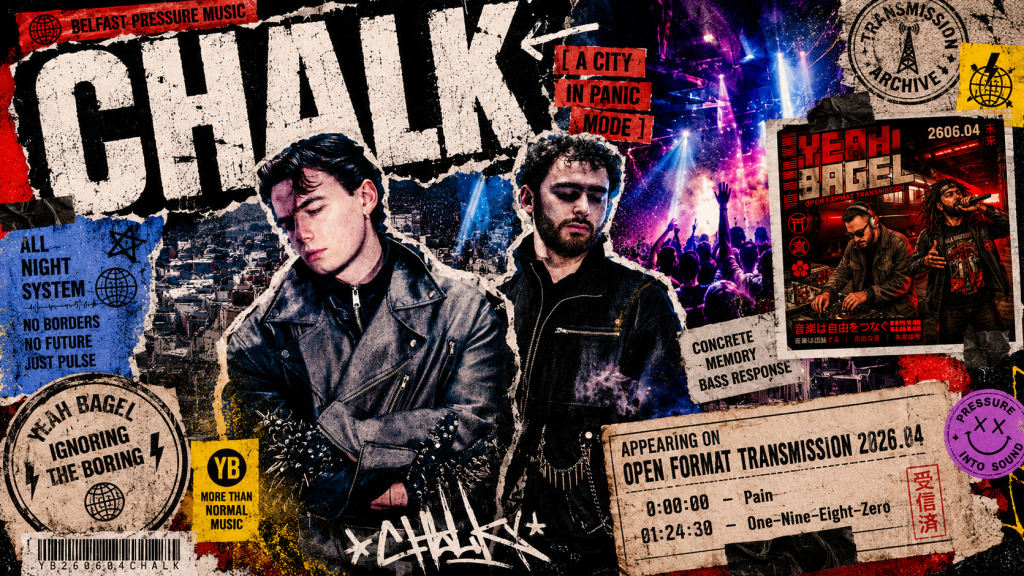
Chalk sound like a city having a panic attack in a nightclub toilet and coming out ten feet taller.
Not polished. Not polite. Not one of those careful post-punk bands who arrive with matching haircuts, a tasteful bass tone, and a press release that says “angular” so many times it starts looking like furniture.
Chalk are something rougher, stranger, and more useful than that.
They are Belfast music with its jaw clenched and its pupils lit up. They are industrial dance-punk with wet concrete on its boots. They are synths that do not shimmer so much as glare. They are guitars dragged through the circuitry. They are the point where a rave system, a punk basement, a film-school brain, and a city full of unresolved ghosts all get locked in the same room and told to make something that can sweat.
The result is not background music. Chalk do not make lifestyle post-punk for expensive raincoats. They make music that seems designed to test the walls. It moves like a body in a strobe-lit state of emergency. It bangs, yes, but it also broods. It has that rare and valuable quality of sounding both physically immediate and emotionally unfinished, as though every track has arrived with a cracked rib and a working smoke machine.
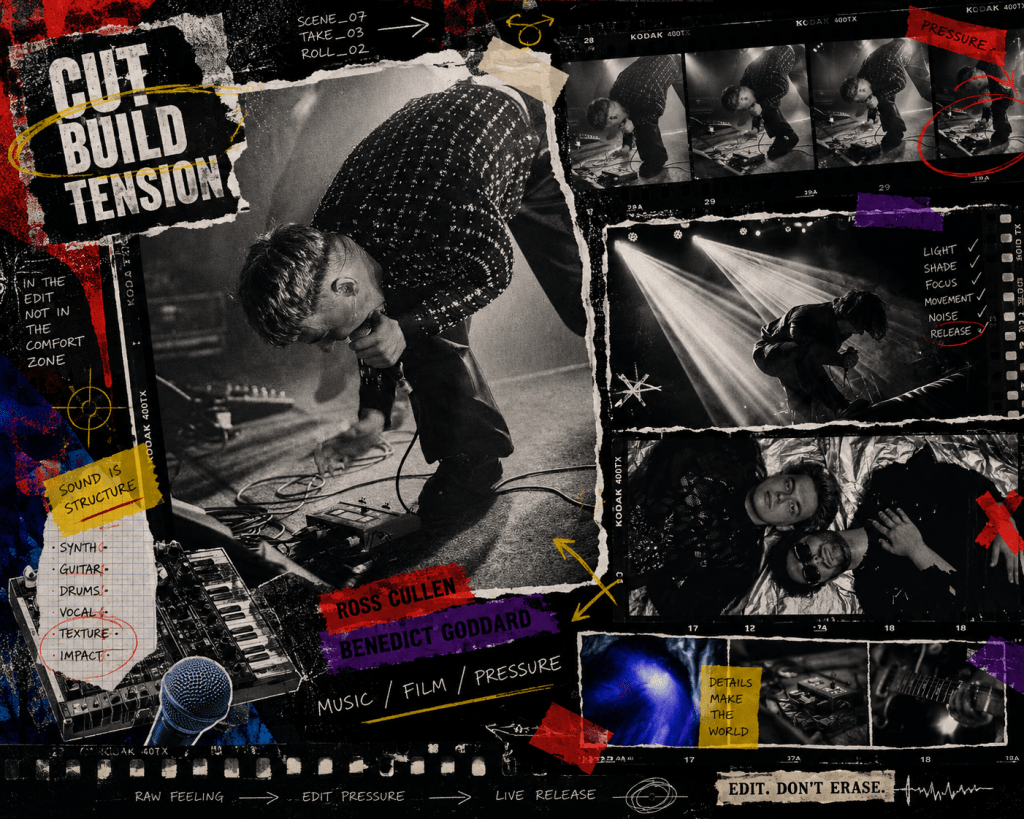
At the centre are Ross Cullen and Benedict Goddard, two musicians and filmmakers who met through film studies and seem to have carried that visual language straight into the music. Chalk songs do not simply unfold, they cut. They flicker. They frame a face, then blow the background apart. There is a sense of montage in the way they build tension: sudden edits, hard lighting, bodies moving through civic gloom, voices half-buried under machinery.
Their debut album, Crystalpunk, is the moment where the earlier pressure of the Conditions EPs gets given a bigger room to detonate in. Those EPs built the charge: abrasive, physical, sweating with intent. Crystalpunk turns that charge into something sharper and more panoramic. The word itself feels like a manifesto scribbled on a shard. Crystal for the glint, the beautiful fracture, the synthetic shine. Punk for the refusal, the bad posture, the need to kick the door even when someone has already opened it.
And Belfast is not scenery here. It is not used as a moody backdrop, not reduced to a convenient shorthand for grit, history, murals, rain, or trauma tourism. Belfast is in the wiring.
That matters.
Because the lazy version of music journalism would put Chalk in a neat little box marked “post-Troubles Belfast” and stroll away feeling useful. But the band are more interesting than that. They are not simply making music about conflict. They are making music about what happens after inherited conflict has been folded into weather, family, education, silence, architecture, accent, self-image, and the part of your nervous system that still flinches before you know why.
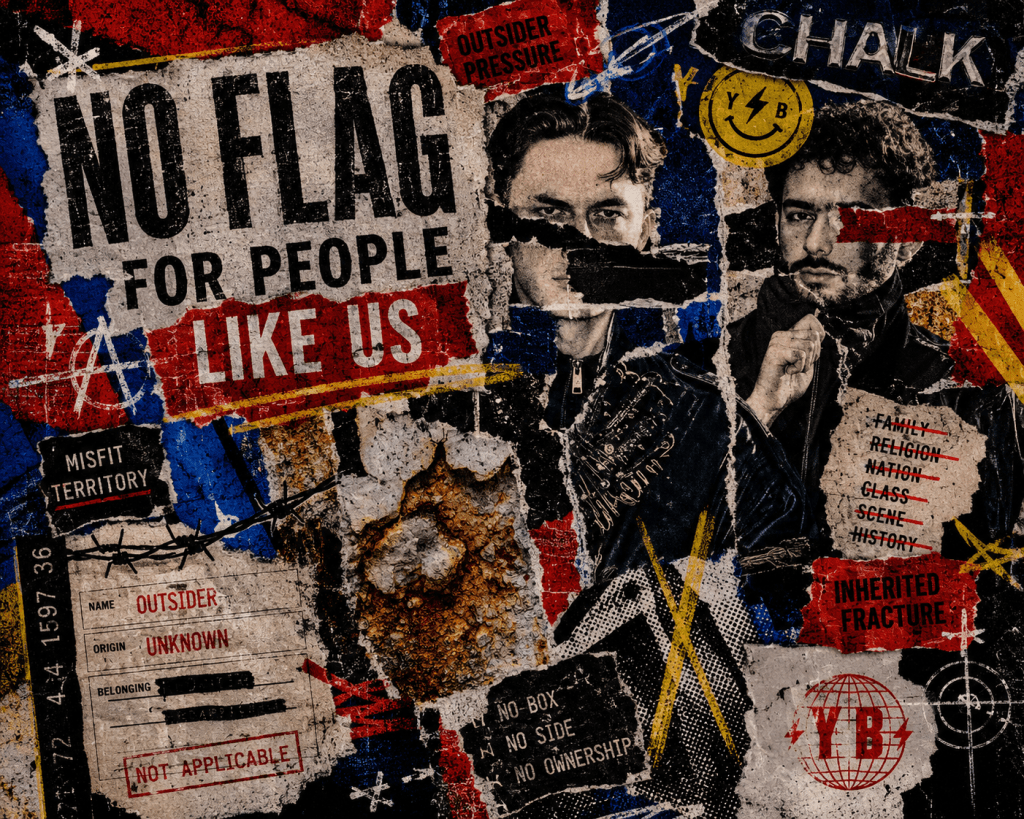
There is a kind of identity pressure in Chalk’s music that feels specific without becoming provincial. Cullen comes from a mixed Protestant and Catholic family. Goddard grew up between English and Irish contexts, pulled between places and definitions. That sense of being claimed by nobody, or claimed incorrectly by everybody, gives Chalk their emotional voltage. They do not sing from a flag. They sing from the gap where the flag was supposed to be.
That gap is loud.
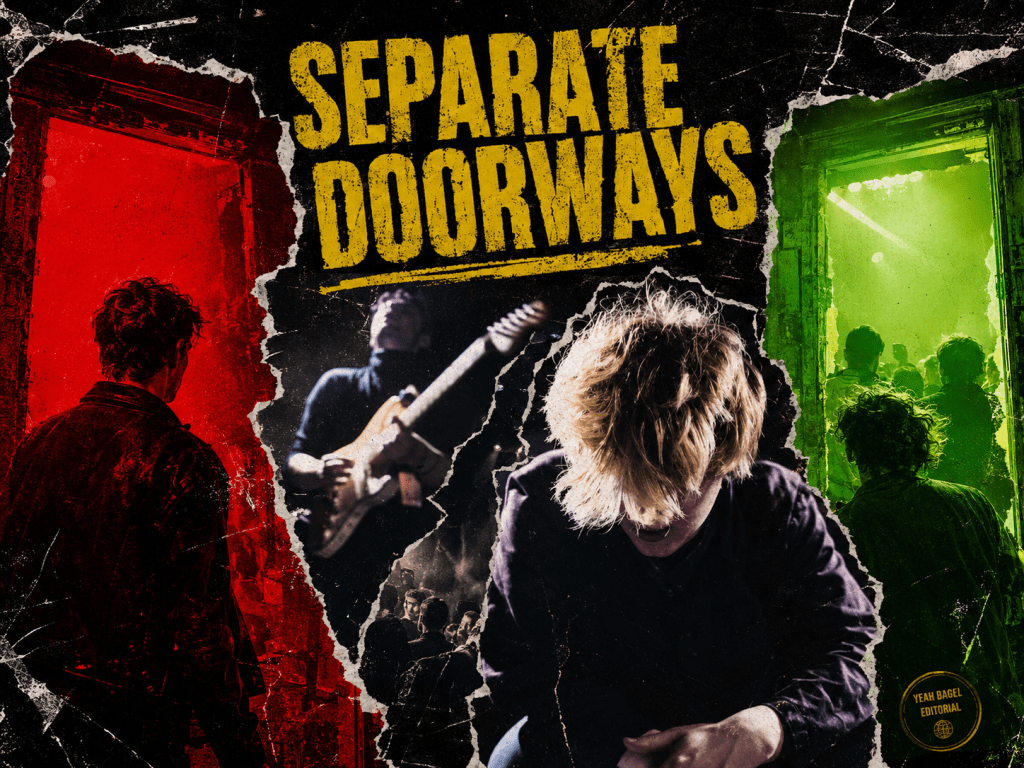
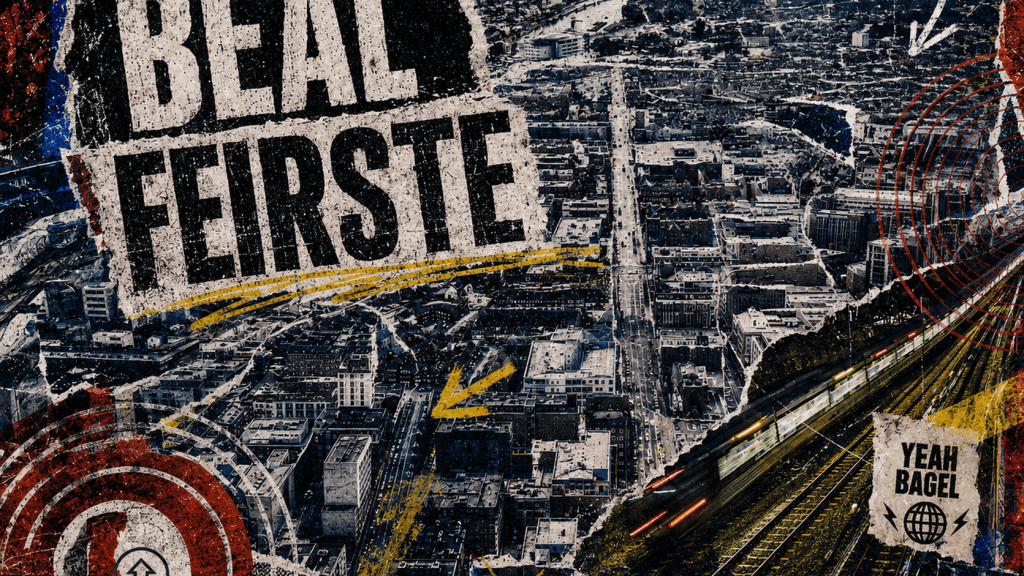
On Crystalpunk, it becomes rhythm, distortion, momentum. “Béal Feirste” is the obvious centre of gravity, and not just because it stretches out like a long walk through a city at night. The title uses the Irish name for Belfast, but the track does not behave like a heritage plaque. It feels less like a statement of belonging than a fight to invent belonging in real time. It builds with the stubborn patience of a crowd forming from separate doorways. By the time it opens out, the song feels communal without becoming cosy. Shoulder to shoulder, but nobody pretending the shoulders are not bruised.
That is the trick Chalk keep pulling off. They make unity sound difficult. They know togetherness is not a scented candle. It is harder. It is sweatier. It involves bass frequencies, mistrust, old stories, family contradictions, civic memory, and someone in the corner still deciding whether to dance or bolt.
“Skem” takes a different route, rooted in a tag spotted on trains moving through the North. It has that urban flash of something seen for two seconds and carried for years. Graffiti is useful here because it refuses the approved channels. It says: I was here, whether or not anyone gave me a column, a budget, a programme, a committee, a mural strategy, or a cultural regeneration brochure with tasteful sans serif fonts. Chalk understand that kind of mark-making. Their music feels tagged onto the side of the official story.
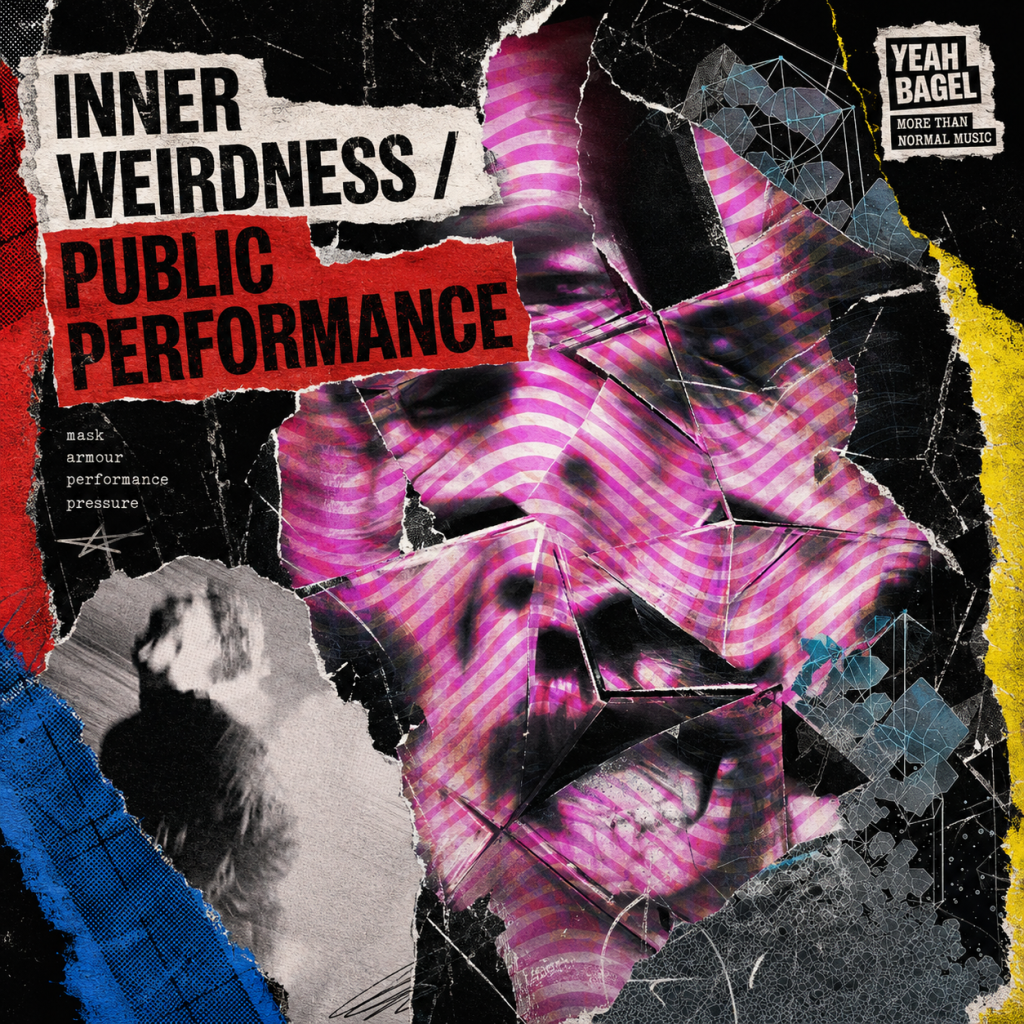
“I.D.C.” pushes further into confrontation. The video’s leather mask and crystal-studded menace make sense because Chalk are fascinated by the gap between inner weirdness and public performance. There is a costume element, but not in the shallow glam sense. More like armour. More like the version of yourself you invent because the ordinary one keeps getting filed under “not quite.” Chalk understand the outsider not as a romantic pose, but as a long-term administrative error. School, family, city, nation, scene: all these systems asking you to tick one box when your actual answer is a distorted synth line and a full-body shudder.
Musically, the comparisons are there because comparisons always arrive with their little clipboards. Nine Inch Nails. Underworld. The Prodigy. Early industrial. Dance-punk. Belfast punk lineage. The grey electricity of post-punk dragged into a club where the floor is sticky and the lights are having a breakdown.
Fine. Some of that is useful. You can hear the machinery. You can hear the rave inheritance. You can hear a dark pop instinct trying to force melody through smoke. You can hear the punk refusal to tidy up the unpleasant bits.
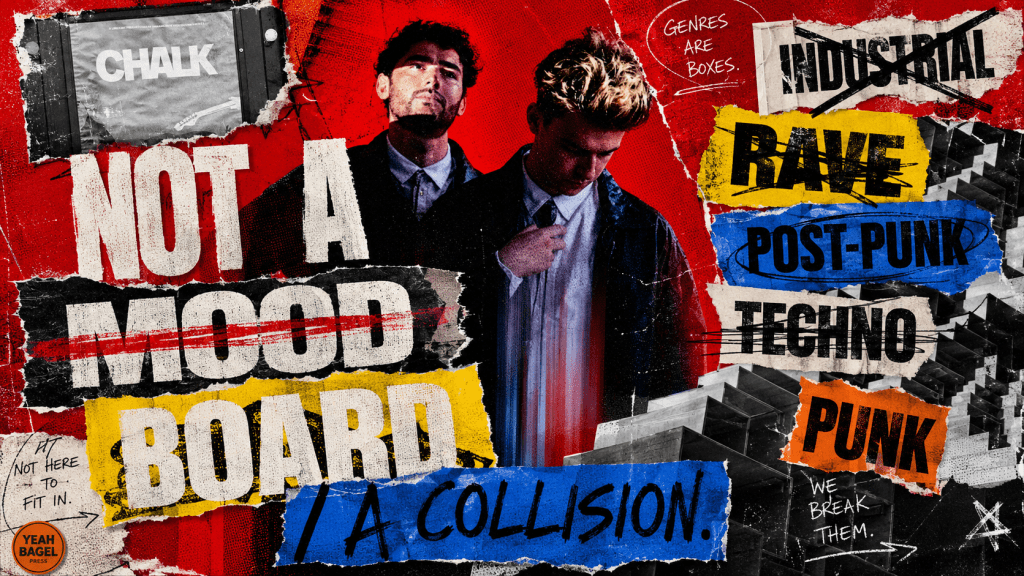
But Chalk do not sound like a mood board. They sound like a collision that found its own grammar.
There is a big difference.
A mood board collects references. A grammar lets you speak. Chalk now speak fluently in impact, pulse, glare, and release. They know when to pummel and when to withhold. They know that a voice can be both command and confession. They know that electronics do not have to mean escape from the body. In their hands, electronics are the body: nerves, panic, muscle memory, adrenaline, dread, heat.
This is why Chalk make sense in the current moment. Not because they are fashionable. Not because the industry has decided, once again, that guitars are back, or that dance music is now allowed to have a bad mood, or that regional scenes are interesting when London needs a new accent to misunderstand.
Chalk make sense because the old categories are leaking.
Rock, rave, punk, techno, industrial, goth, noise, electronic, alternative: all those border posts are looking increasingly silly. The best music now often arrives without asking which queue it should stand in. Chalk are part of that. They are not “blending genres” in the tired festival-biog sense. They are using whatever tools can carry the feeling. If the feeling needs a breakbeat, it gets one. If it needs a guitar that sounds like a warning light, there it is. If it needs a vocal line that aims for the chest rather than the chin, Cullen sends it.
And underneath all that is the question that keeps circling the music: what do you do with an inheritance you did not ask for?
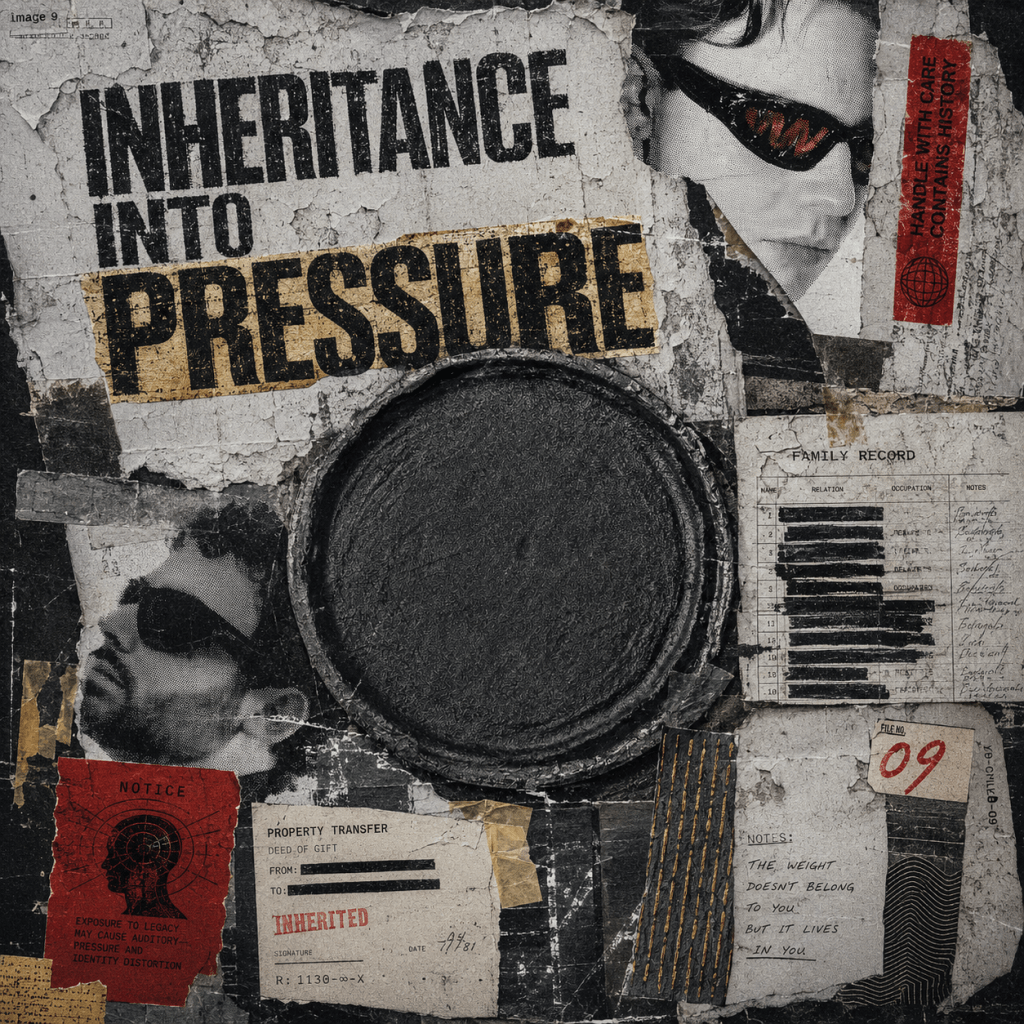
Chalk’s answer is not to explain it neatly. Thank God. Neatness would kill this band. Their answer is to convert inheritance into pressure, pressure into movement, movement into sound, and sound into a temporary room where the unclaimed can stand together without having to become tidy.
That is where Crystalpunk earns its name. It is beautiful and abrasive. It catches light and cuts skin. It has moments where the surface feels almost too sleek, where the industrial edges are sharpened into something dangerously close to pop architecture. But even then, the unease remains. The shine is not decoration. It is the gleam on broken glass outside the venue after everyone has gone home.
Chalk are not here to give Belfast a new slogan. They are not here to be the acceptable face of civic tension with a synth rack and good shoes. They are not here to make trauma digestible for export.
They are doing something better.
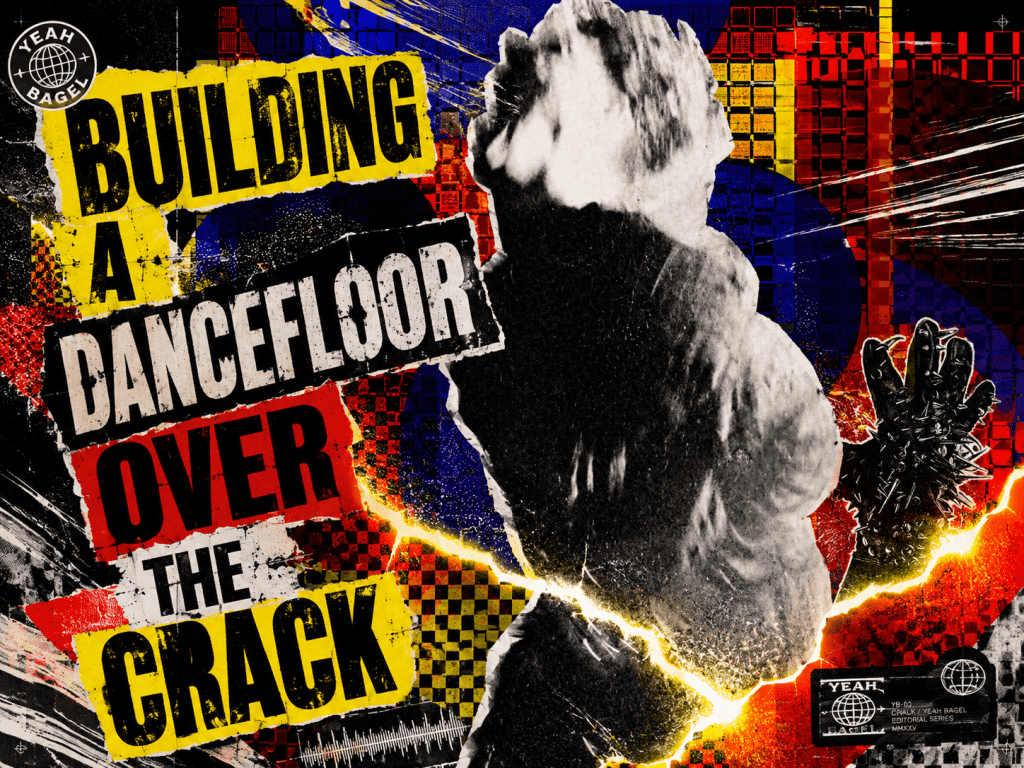
They are making music from the place where identity fails, then building a dancefloor over the crack.
And maybe that is why they feel so alive. Not resolved. Not healed in the soft-focus documentary sense. Alive. Twitching. Angry. Tender in strange places. Built from contradictions that refuse to cancel each other out.
Chalk sound like two people making as much noise as they can because silence has already had too many years in charge.
They sound like Belfast refusing to be a museum of its own wounds.
They sound like a flag nobody gave them, made from voltage, sweat, black smoke vinyl, and the stubborn idea that if the old symbols do not fit, you can always make your own.
Yeah Bagel approves this frequency.