

At 00:21:30 on Yeah Bagel’s Open Format Transmission 2026.02, Bob Vylan arrive with “Sick Sad World”, and the room temperature changes.

Not politely. Not with one of those careful little genre pivots that lets the playlist pretend it is being adventurous while still keeping its shoes clean. This is not fusion. This is not “rock meets rap” in the festival-brochure sense, where two traditions shake hands under corporate lighting and everyone agrees the vibes are inclusive.
Bob Vylan sound like someone has kicked open the staff entrance at the museum of British decline.
The track comes in carrying that familiar Bob Vylan pressure: punk velocity, grime phrasing, hardcore disgust, political cartoon violence, and the weird fairground stink of a country trying to monetise its own collapse. “Sick Sad World” is a title that could be read as pure slogan, but with Bob Vylan it lands closer to a weather report. Not shock for shock’s sake. More like: look outside. The sky has teeth.
Bob Vylan have always understood that punk is not a guitar tone. It is a refusal mechanism. It is the part of the body that rejects poison before the brain has finished writing a statement. Plenty of bands have the distortion, the fonts, the torn sleeves, the backstage photos, the borrowed menace. Bob Vylan have the thing underneath: the knowledge that Britain’s respectable surface is only respectable because someone else is forced to absorb the mess.
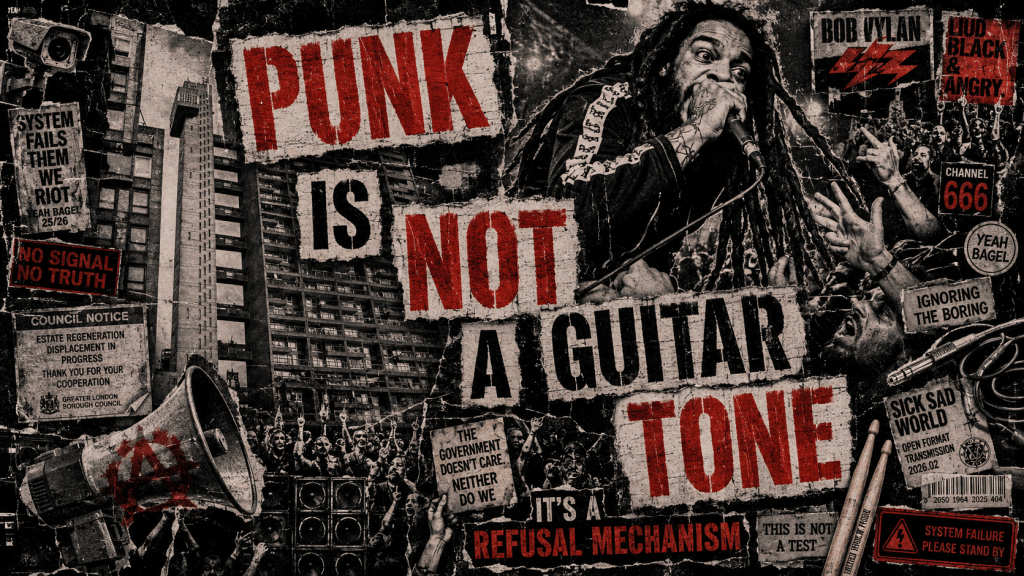
The duo, Bobby Vylan and Bobbie Vylan, operate like a two-person emergency broadcast. Guitar, drums, voice, sweat, contempt, rhythm. Their music pulls from punk, grime, rap, hardcore, dancehall, reggae and spoken-word protest without ever sounding like a tasting flight. Nothing is delicately arranged in little bowls. Everything goes in the pressure cooker. The result is not genre-blending so much as genre-compression: the city compacted into a shout.
And what they shout about matters.
Racism. Police violence. Class humiliation. Food poverty. Masculinity sold back to men as a weapon. The music industry’s polite extraction machine. Britain as empire hangover, Britain as landlord, Britain as headteacher, Britain as bouncer, Britain as wellness app telling you to breathe while standing on your neck. Bob Vylan songs do not ask whether politics belongs in music. They sound like they have never heard a more ridiculous question.
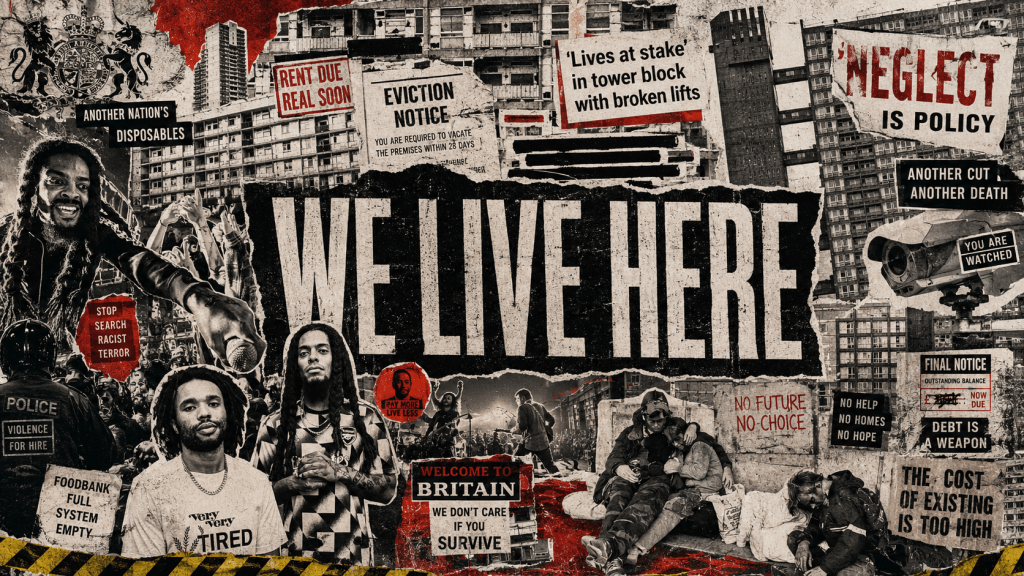
Because politics is already in the room. It is in who gets booked, who gets searched, who gets believed, who gets called aggressive, who gets called articulate, who gets called urban, who gets called divisive, who gets called “not quite right for our audience.” Bob Vylan simply refuse to pretend the room is neutral.
That refusal has become part of their story. Their 2020 record We Live Here did not so much enter the UK punk landscape as confront it in the smoking area. Then Bob Vylan Presents The Price Of Life pushed them further into view, a record that understood cost not as metaphor but as an itemised bill: rent, food, body, rage, survival, dignity. By the time Humble As The Sun arrived in 2024, the band were no longer a glitch at the edge of the alternative circuit. They were a serious independent force, running through Ghost Theatre, doing the work themselves, and proving that DIY does not have to mean tiny. DIY can mean infrastructure. DIY can mean ownership. DIY can mean nobody gets to quietly turn down the volume from an office with nice plants.
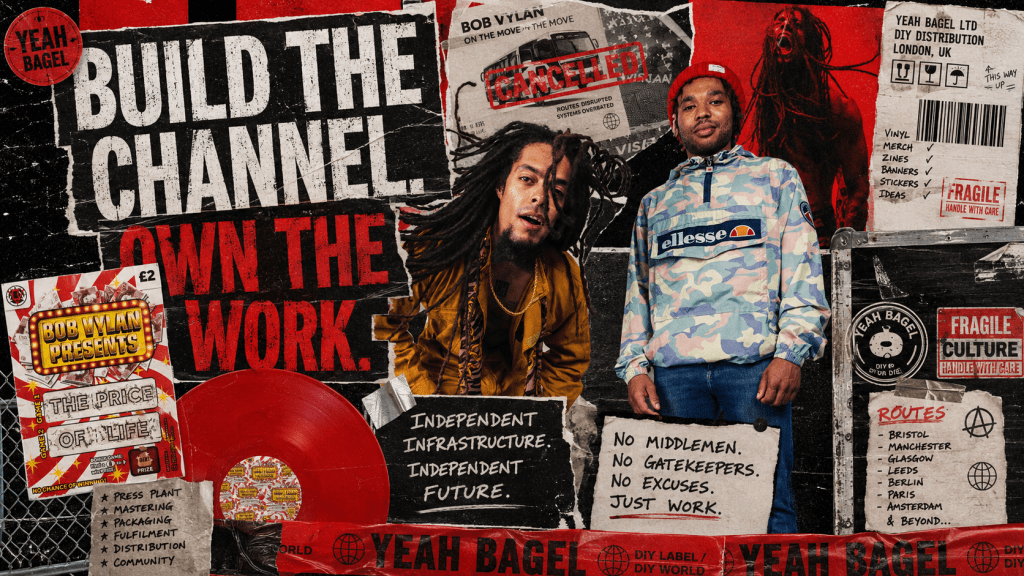
That independence is crucial. Bob Vylan are not only angry inside the songs. They are structurally angry. They have built a career in a way that questions the machinery around careers. Own the label. Control the work. Meet the audience. Sell the records. Take the risk. Take the hit. Keep moving. There is something almost old-fashioned about it, but not nostalgic. More boot-room than boardroom. More pamphlet table than brand activation.
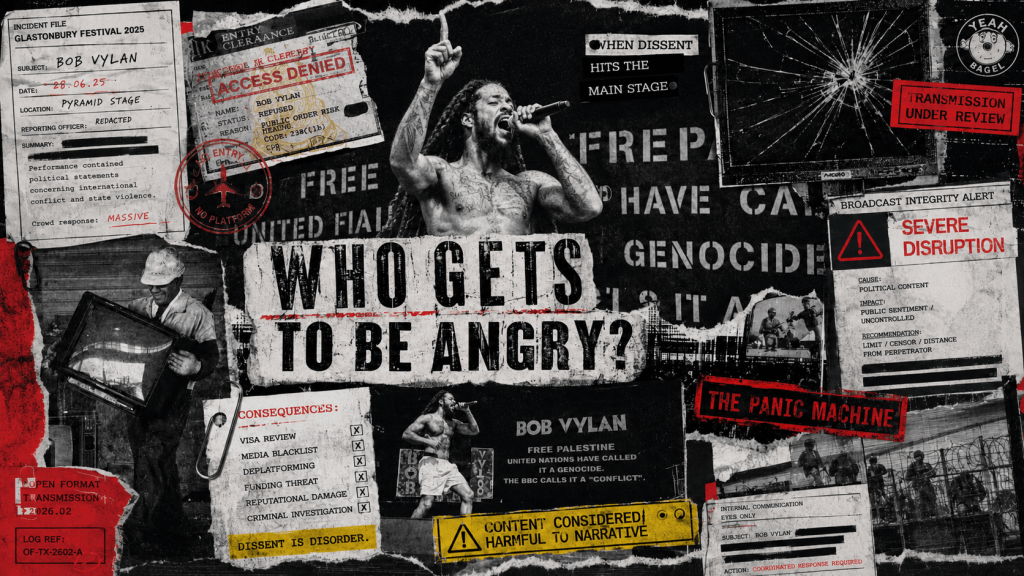
“Sick Sad World” lands after all of that history, and after a period in which Bob Vylan became impossible to discuss without also discussing punishment, outrage, state borders, broadcaster panic and the volatile line between political speech and public harm. Their 2025 Glastonbury set detonated far beyond the field. Chants against the Israeli military were condemned by politicians, festival organisers and broadcasters. The BBC faced complaints. The band’s US visas were revoked. Police investigated. Later, that investigation ended with no charges.
Any serious article has to hold more than one thing at once here.
Bob Vylan’s politics are part of their power. So is the danger of slogans when thousands of people chant them back in a charged public space. Rage can clarify, but it can also flatten. A crowd can turn a political position into a blunt instrument very quickly. To say that is not to do the dreary liberal handwringing routine where every sharp edge must be bubble-wrapped before it can enter culture. It is to recognise that Bob Vylan are working with combustible material, and they know it. Fire is not innocent because the house is already burning.
But it is also true that the reaction to Bob Vylan revealed something about who gets treated as a threat and who gets treated as background noise. The British cultural machine has endless patience for violence when it arrives with uniforms, sponsors, policy language or historical distance. It is less relaxed when violence is named loudly by people who were not invited to chair the panel. Suddenly everyone discovers standards. Suddenly everyone becomes very concerned about tone. Suddenly the room fills with men asking for nuance from behind barricades of selective outrage.
This is where Bob Vylan become interesting beyond the songs. They expose the circuitry. They make visible the panic wires connecting festivals, broadcasters, politicians, police, visa regimes, media cycles and audience loyalty. They are not simply a band being controversial. They are a stress test for the liberal entertainment system. How much dissent is acceptable? How angry is too angry? Who gets forgiven? Who gets platformed? Who gets processed?
And then, through all of that smoke, there is still the music.
That part matters, because Bob Vylan are not a think-piece delivery system. They are a band. A loud, physical, funny, furious, oddly uplifting band. Their best songs have the satisfying thump of something badly assembled being hit with a spanner until it works. They understand hooks. They understand momentum. They understand that anger without rhythm is just a comments section with shoes. “Sick Sad World” does what their strongest tracks do: it turns disgust into movement.
That is the secret ingredient. Movement.
Bob Vylan are often described through rage, and rightly so, but rage is not the whole picture. There is joy in the force of it. Not cosy joy. Not brunch joy. More the joy of refusing to be pacified. The joy of a body remembering it can push back. The joy of a crowd finding the same pulse and deciding, for three minutes, not to behave itself for the benefit of people who have never behaved honourably toward them.
That is why they belong on Yeah Bagel.
Not because they are neat. Not because they are easy to defend in every moment. Not because every line arrives pre-sanitised for the archive. They belong because they carry the argument inside the noise. They make music that knows culture is not a playlist of lifestyle choices. Culture is where the bruise talks back.
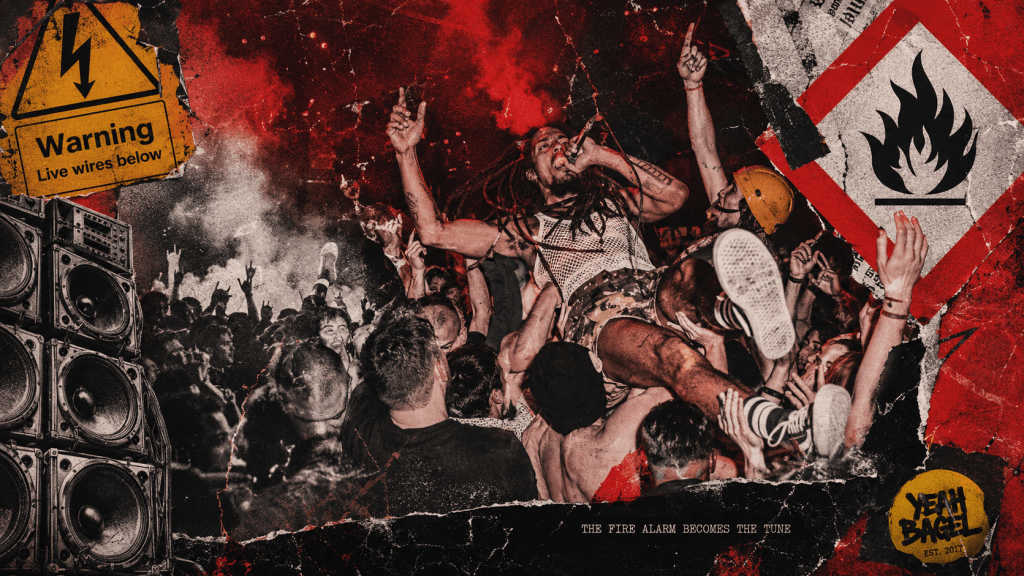
“Sick Sad World” is not an escape from the sickness. It is a torch held over it. The track does not offer healing in the tasteful, algorithm-friendly sense. It offers recognition. It says: yes, the world is ugly. Yes, the systems are rigged. Yes, the floor is sticky with history. Yes, the people in charge would prefer you to express your pain through approved channels between 9 and 5.
Bob Vylan answer with drums, distortion and teeth.
They are not asking to be liked. They are asking what liking was ever worth when the building is on fire.
And somewhere around 00:21:30, in the middle of the transmission, the fire alarm becomes the tune.
