



CM360 WHEN I GROW UP / I WANNA BE A DJ

CM360 examines the way aspiration is formed before it can be fully understood. A joyful infant wearing oversized headphones becomes both icon and subject, caught between genuine desire and the systems that teach us what a desirable future should look like.
The language of ambition is presented as something processed, measured and approved. Listening becomes training. Play becomes productivity. Identity becomes a forecast.
Yet the image resists a purely cynical reading. The child’s expression still carries spontaneity, pleasure and possibility. CM360 holds these forces together: the freedom to imagine a future, and the quiet machinery already shaping that imagination.
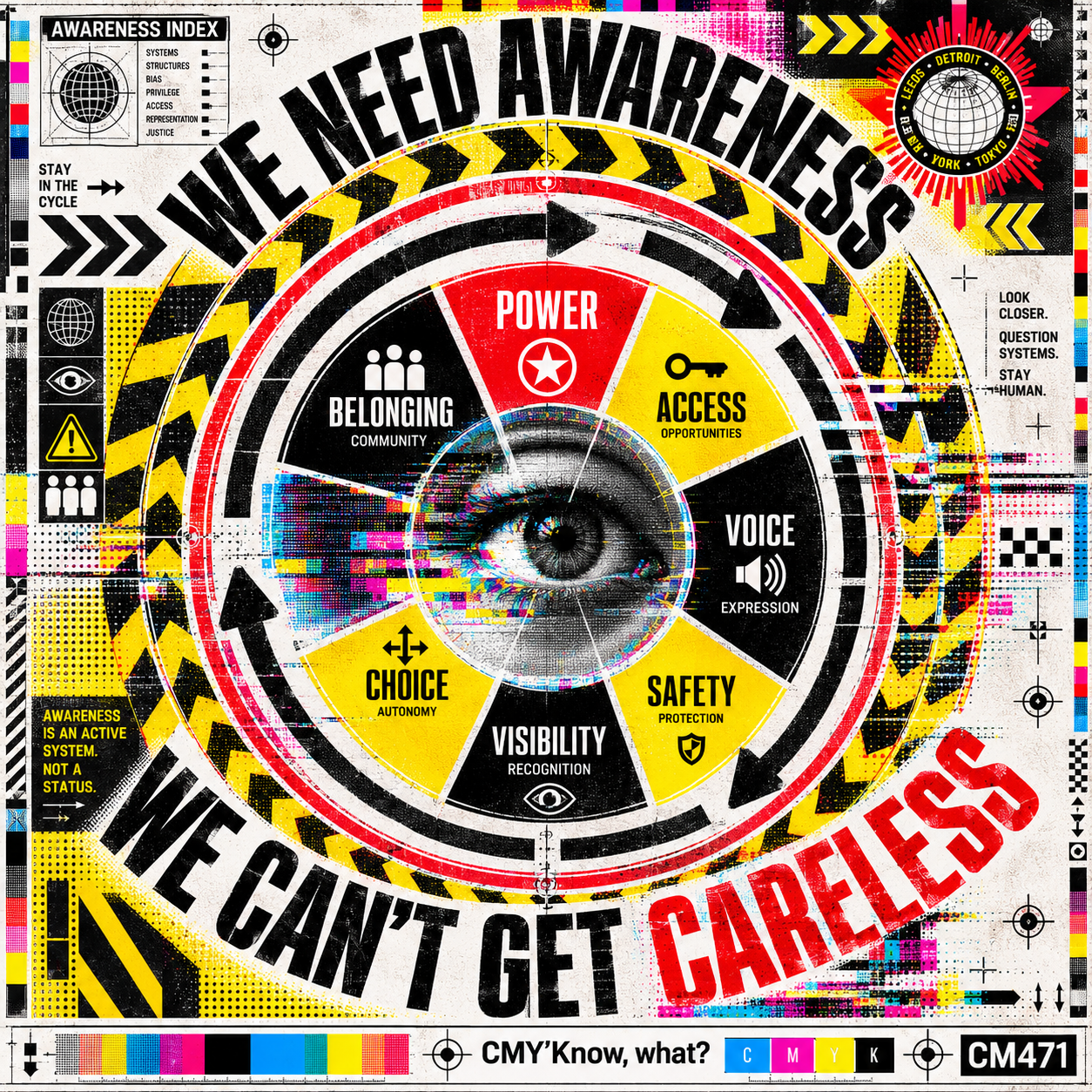
CM471 WE NEED AWARENESS, WE CAN’T GET CARELESS
Every society builds systems that promise to guide us: signs, maps, rules, institutions and shared ideas. They help us navigate complexity, but they also shape what we notice, what we overlook and which paths feel natural to follow.
This work reimagines those familiar systems as a circular mechanism that never stops turning. Its warnings, symbols and instructions appear authoritative, yet they cannot tell us where to look or what deserves our attention. That responsibility remains with the viewer.
The fragmented eye at the centre is deliberately unstable. It never resolves into a single, reliable image because awareness is not a permanent achievement. It is an ongoing practice of questioning assumptions, recognising blind spots and resisting the comfort of certainty.
Carelessness is rarely dramatic. More often it arrives quietly, through habit, distraction or the belief that someone else is paying attention. CM471 suggests that awareness is less about possessing the right answers than about remaining willing to look again, especially at the systems we trust most.
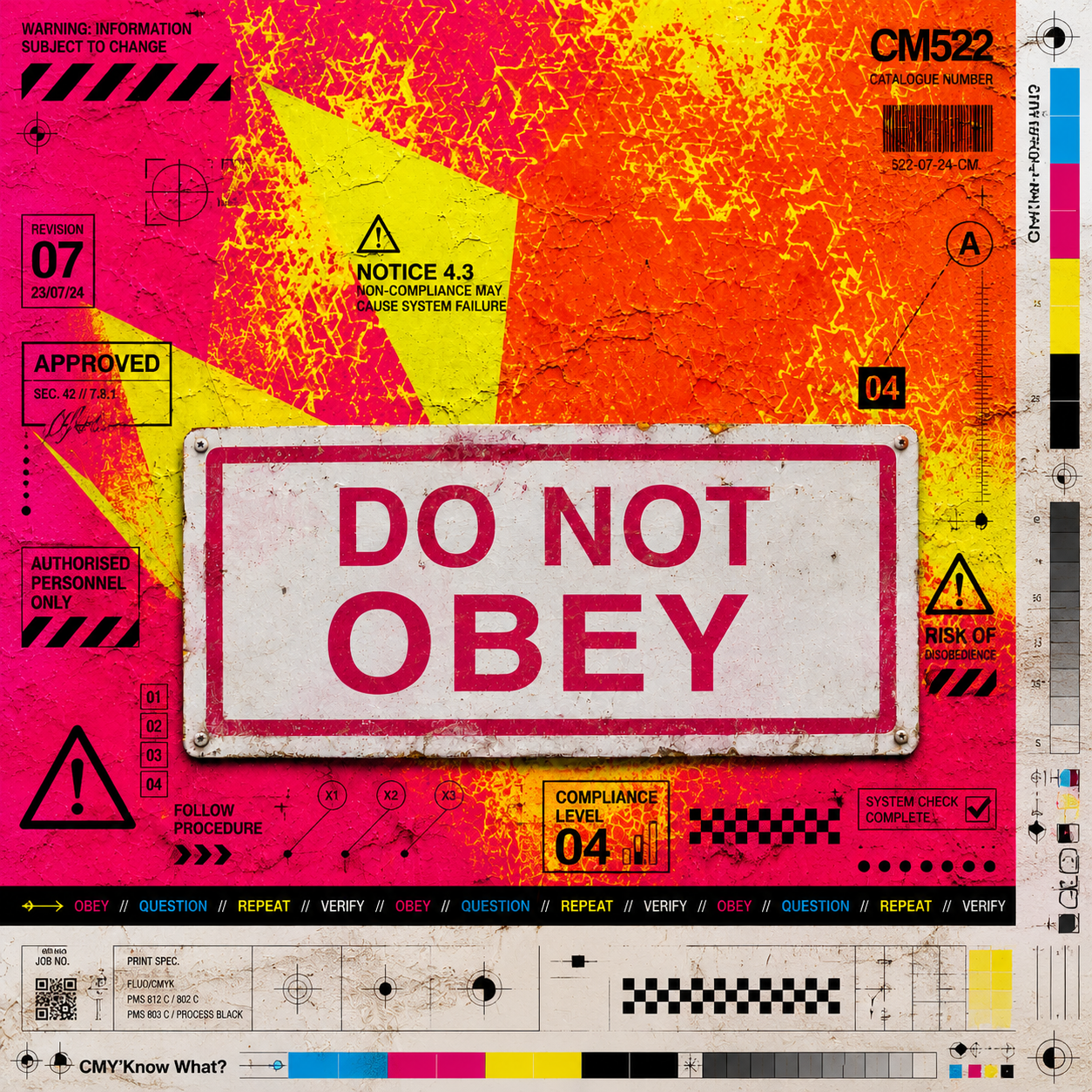
CM522 DO NOT OBEY
At first glance, the work adopts the reassuring visual language of public safety: bold typography, institutional graphics and the promise that every situation can be managed through compliance. Yet one altered word fractures that confidence. A directive intended to preserve order becomes an invitation to question it.
Rather than rejecting authority outright, CM522 asks a more uncomfortable question: who benefits from unquestioning obedience? The piece occupies the uneasy space between civic responsibility and critical thought, where instructions deserve to be read before they are followed, and certainty becomes something earned rather than inherited.
In an age of endless notifications, policies, algorithms and persuasive systems, the most radical act may not be rebellion itself, but the willingness to pause, examine, and decide
CM693 Hate Is at Its Most Dangerous When It Sounds Reasonable

This work examines the visual language of persuasion rather than the spectacle of extremism. Borrowing the reassuring grammar of public campaigns, civic optimism and political advertising, it presents a world built from familiar promises: strong families, safe communities and a better tomorrow. Nothing appears overtly threatening. That is precisely the point.
The central figures are rendered as symbols rather than individuals, their posterised forms hovering between photograph and illustration. The subtle distortions and colour shifts fracture the illusion of certainty, suggesting that even the most polished narratives can conceal hidden assumptions and unspoken exclusions.
Rather than depicting hatred as loud or irrational, CM693 proposes that its most enduring forms often arrive wrapped in the language of common sense, respectability and shared values. The work invites viewers to question not only what they are being asked to believe, but why certain ideas feel immediately trustworthy, and who benefits when prejudice is made to appear ordinary.
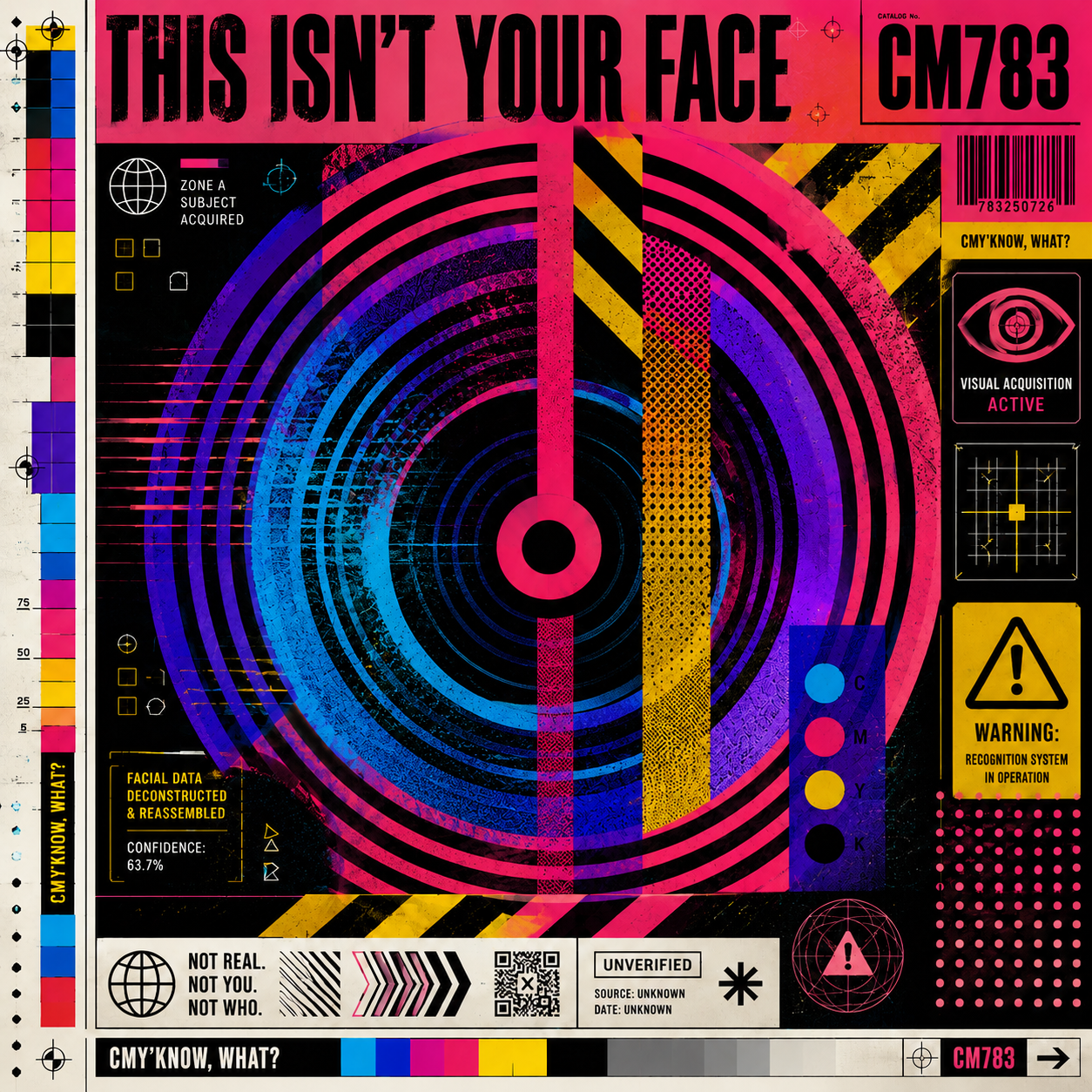
CM783 THIS ISN’T YOUR FACE
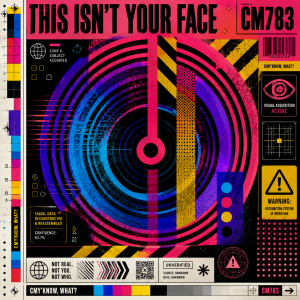
Identity is often treated as something fixed: a face, a record, a recognisable arrangement of features. Here, that certainty collapses. The human image has been removed and replaced by a glowing outline, trapped inside a system of targets, measurements and warnings.
The work asks what remains when recognition no longer requires understanding. A person becomes a pattern to be captured, processed and judged, while the system producing that judgement disappears behind the authority of its own graphics.
CM783 is both denial and warning. The image assigned to us may resemble us, but it has been constructed elsewhere, interpreted by others, and made useful to institutions we cannot see. The question is no longer whether the system recognises you, but who gains control once it claims that it does.
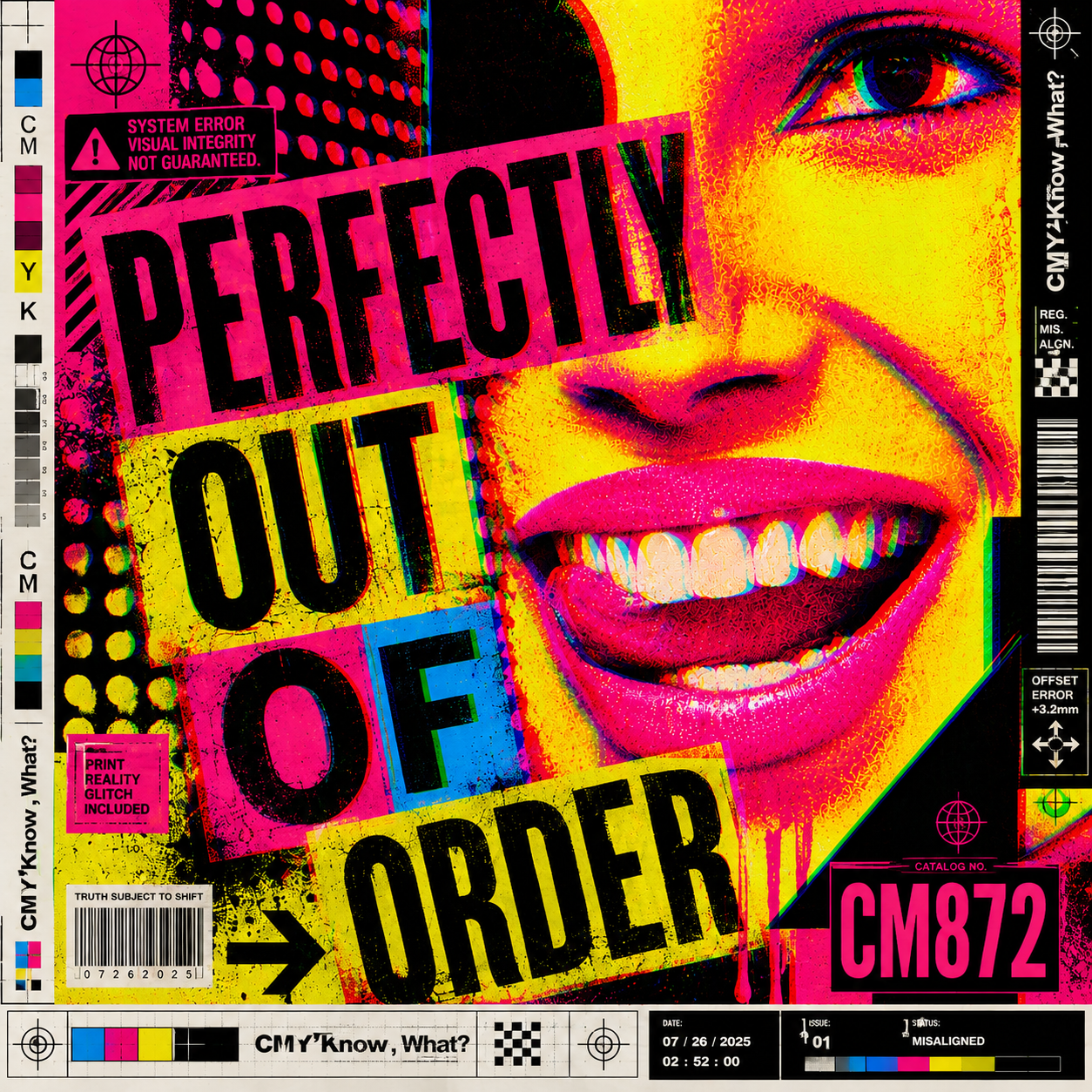
CM872 · PERFECTLY OUT OF ORDER
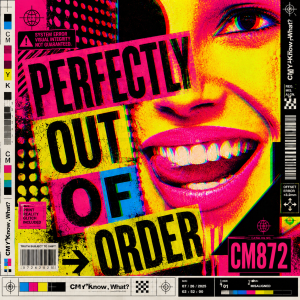
Order has a remarkable talent for disguising itself as truth. Align enough colours, straighten enough edges, and contradiction begins to look like certainty. This work interrupts that illusion. The image slips out of register, fragments refuse to meet, and the face becomes a negotiation between competing versions of itself.
The fluorescent palette amplifies the instability rather than resolving it. What first appears vibrant and complete gradually reveals a system where every layer has shifted by a fraction, leaving traces of alternate realities visible beneath the surface. The error is not hidden. It is elevated into the primary subject.
CM872 suggests that disorder is rarely the absence of structure. More often, it is the consequence of structures colliding, each insisting it is the correct alignment. The resulting image is neither broken nor finished. It is suspended between multiple states of completion, inviting the viewer to question whether perfection has ever been anything more than a successful registration of competing perspectives.
CM921 EVERY DISTORTION HAS AN AUTHOR

Four versions of the same portrait occupy the frame. Three appear familiar. One has been inverted, revealing that even identical source material can produce radically different readings through a single intervention.
The work considers distortion not as an accident, but as an authored act. Every crop, omission, enhancement, repetition or inversion reflects a choice made by someone or something. Images rarely arrive untouched. They are edited, reframed, compressed, ranked and redistributed until the boundary between record and construction becomes increasingly difficult to locate.
Rather than asking whether an image is true or false, CM921 asks a different question: Who benefited from this version becoming the one we see? Every distortion points back to its maker. Every alteration leaves evidence. Every image has an author, even when they remain invisible.
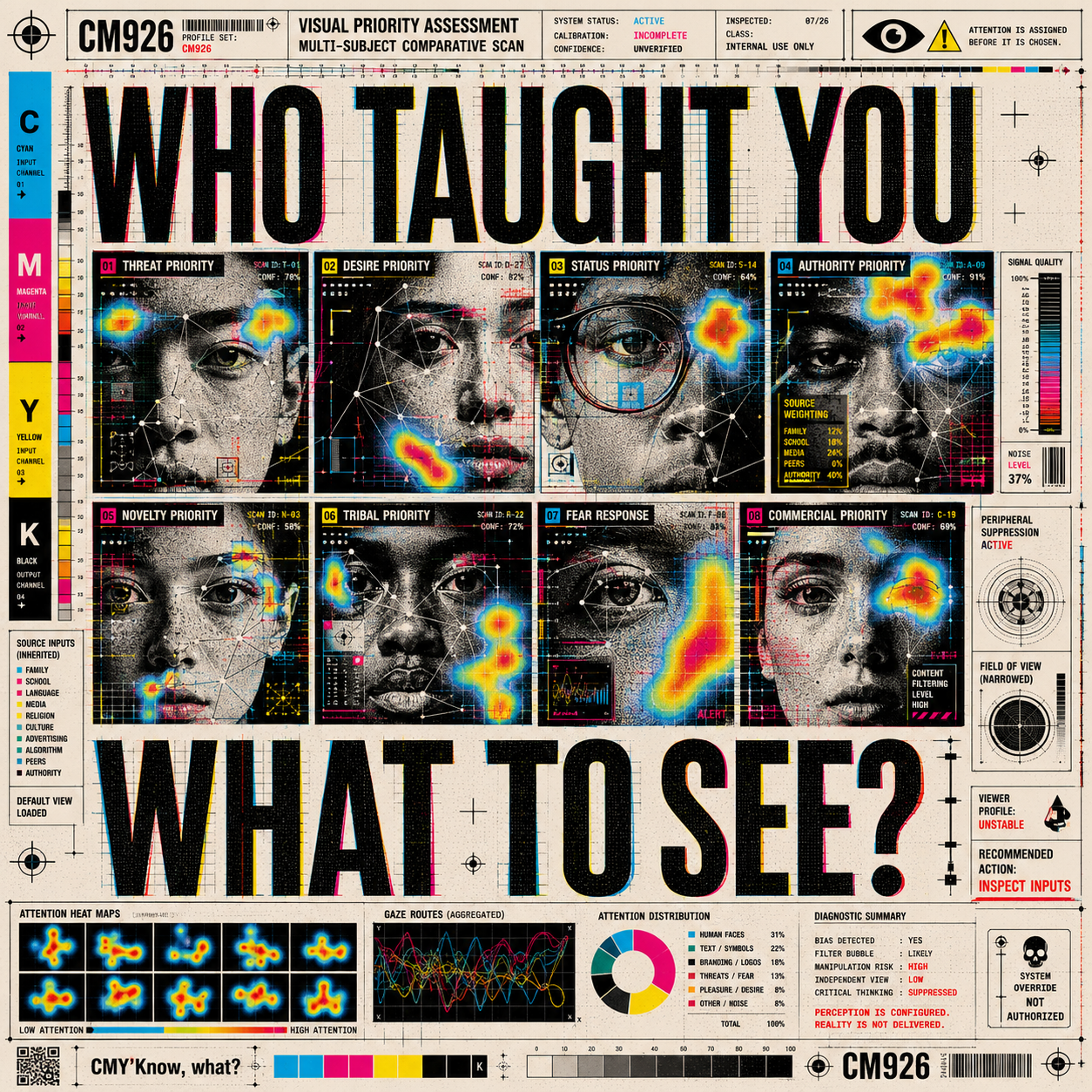
CM926 WHO TAUGHT YOU WHAT TO SEE?
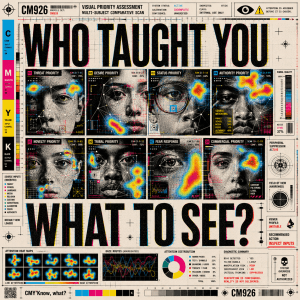
We often imagine perception as a private act, as though seeing begins with the eyes and ends with the mind. This work proposes something more unsettling: that attention is first organised by the systems surrounding us. Long before we make conscious judgements, countless institutions, technologies and cultural habits have already suggested what deserves notice, what can be ignored, and what should remain invisible.
Borrowing the visual authority of biometric interfaces, diagnostic imaging and machine vision, the composition presents perception as something continuously measured, calibrated and optimised. The repeated faces are not portraits of individuals but stand-ins for a broader human condition. Each is analysed differently, implying that every worldview emerges from a unique combination of inherited influences, environmental cues and algorithmic feedback.
The question posed by the title has no single answer. It is an invitation to inspect the origins of our own attention. Rather than asking what you believe, CM926 asks a prior question: who, or what, first taught you where to look?
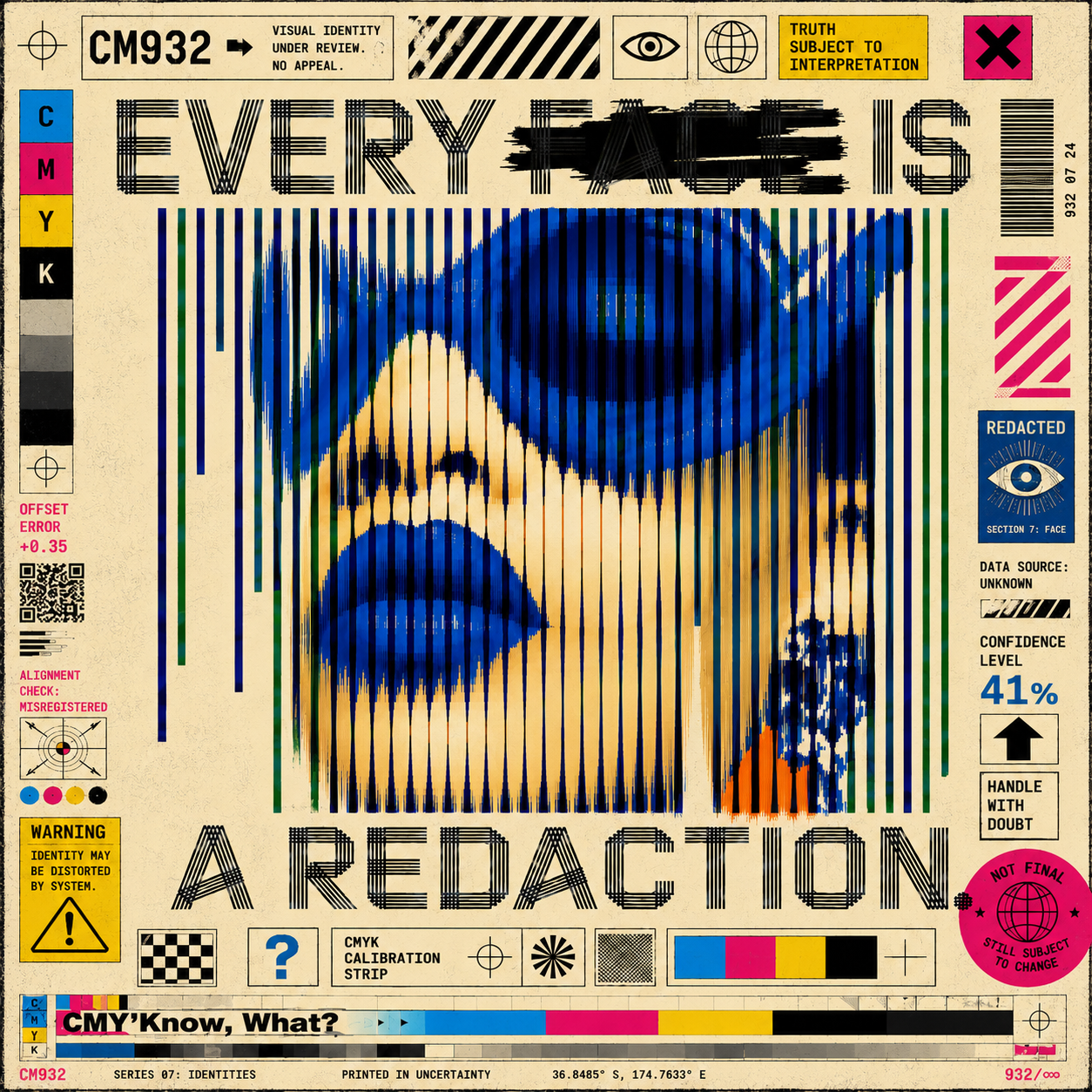
M932 EVERY FACE IS A REDACTION.
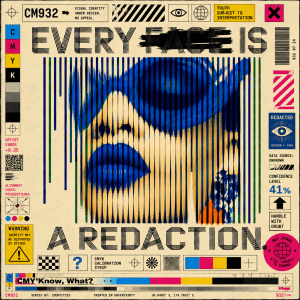
Every portrait is an edited document.
Identity rarely arrives intact. It is cropped by memory, censored by expectation, compressed into categories, and revised each time it is observed. What appears to be recognition is often only the residue left behind after countless acts of omission.
The failed redaction is the critical gesture. It attempts to conceal, yet reveals enough for the viewer to complete the image themselves. In that act of completion, perception becomes authorship. We do not merely discover identities. We manufacture them from fragments.
The face persists beneath the marks, but certainty does not. What remains visible is not the truth, only the evidence that someone tried to control how truth would appear.
