

clipping. do not sound like the future.
That would be too comforting.
The future is always something polite people can put at a safe distance. A chrome postcard. A warning label. A panel discussion. A terrible coffee-table book called What Comes Next? sitting untouched in the foyer of a consultancy that has just replaced its cleaners with an app.
clipping. sound closer than that.
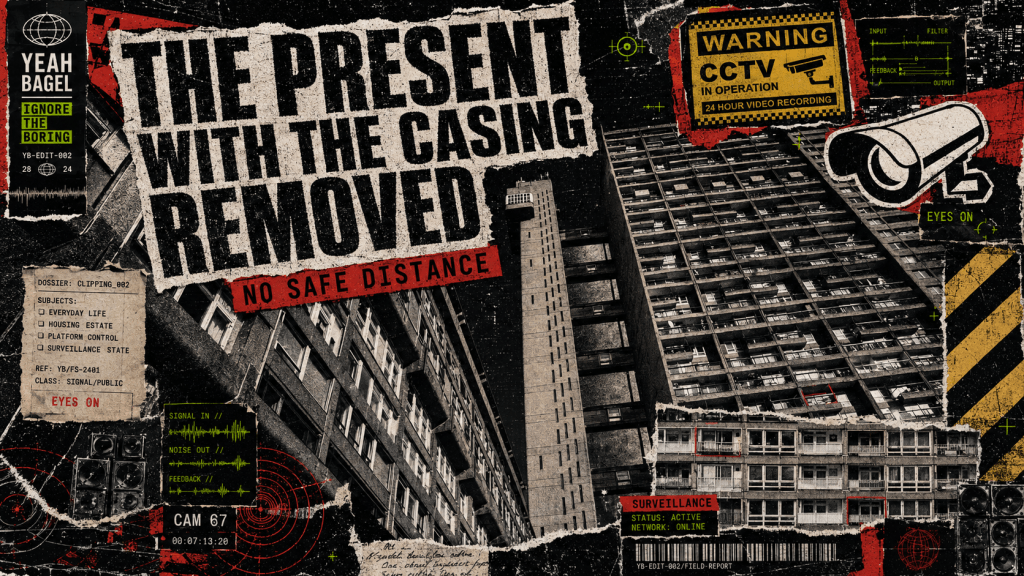
They sound like the present with the casing removed. The wires exposed. The invoice still warm. The room too bright. The bassline coming through the wall from a club you cannot afford to enter, while outside someone is trying to sell your biometric shadow back to you as convenience.
They sound like hip-hop after the police helicopter has become ambient noise.
They sound like science fiction once it stops being escapism and starts behaving like journalism with sharper teeth.
This is the trick with clipping., if trick is even the word. On paper, the ingredients risk looking like something a lesser band would turn into a dreadful concept spreadsheet: Daveed Diggs, the dazzling rapper and actor with Broadway voltage in his bloodstream; William Hutson and Jonathan Snipes, producers with a taste for noise, horror, musique concrète, damaged club architecture and the kind of sound design that makes a room feel guilty.
But clipping. are not a novelty collision between “rap” and “experimental music,” whatever that tired festival brochure phrase is meant to mean. They are not hip-hop with a chainsaw held up beside it for shock value. They are not difficult for the sake of being difficult, though they will absolutely let you know when your ears have been living too softly.
They are a rap group.
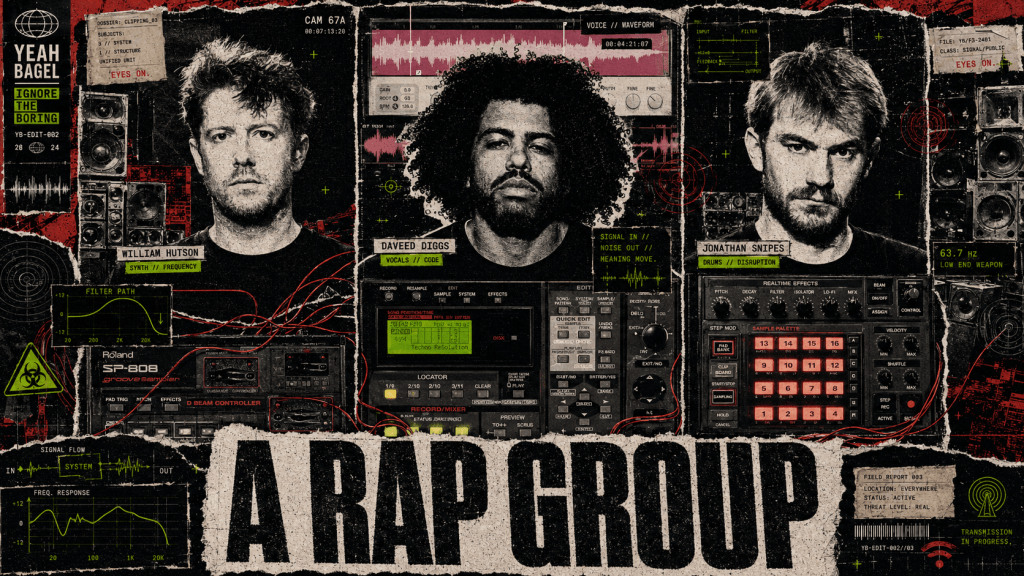
A very serious, very strange, very funny, very violent, very literary rap group.
And the crucial thing is that the rap never arrives as a guest in the noise. It owns the building. Diggs raps with the kind of precision that makes speed feel less like athleticism and more like surveillance footage played back frame by frame. The syllables do not tumble. They assemble. He can sound conversational while moving at machine pace, then suddenly snap into a character, a witness, a system, a threat, a body running through a corridor with no exit sign.
Around him, Hutson and Snipes build tracks that seem less produced than engineered under hostile conditions. Static becomes weather. Feedback becomes furniture. Bass becomes an interrogation method. Beats appear, disappear, corrode, return wearing someone else’s coat. There are songs where the rhythm feels almost traditional, until you notice the walls sweating. There are songs where the production seems to be actively trying to evict the listener, only for Diggs to stroll through it, perfectly calm, holding the whole collapsing structure together with breath and grammar.
That calm matters.
Because clipping. understand horror.
Not Halloween horror, though they have gone there with relish. Not just the slasher grin, the blood pool, the John Carpenter hallway, the delightful bad-news synth creeping under the door. Their horror is structural. It is paperwork horror. Border horror. Data horror. Capital horror. The horror of being processed, classified, bought, sold, chased, watched, renamed, and then told that the system has no record of your complaint.
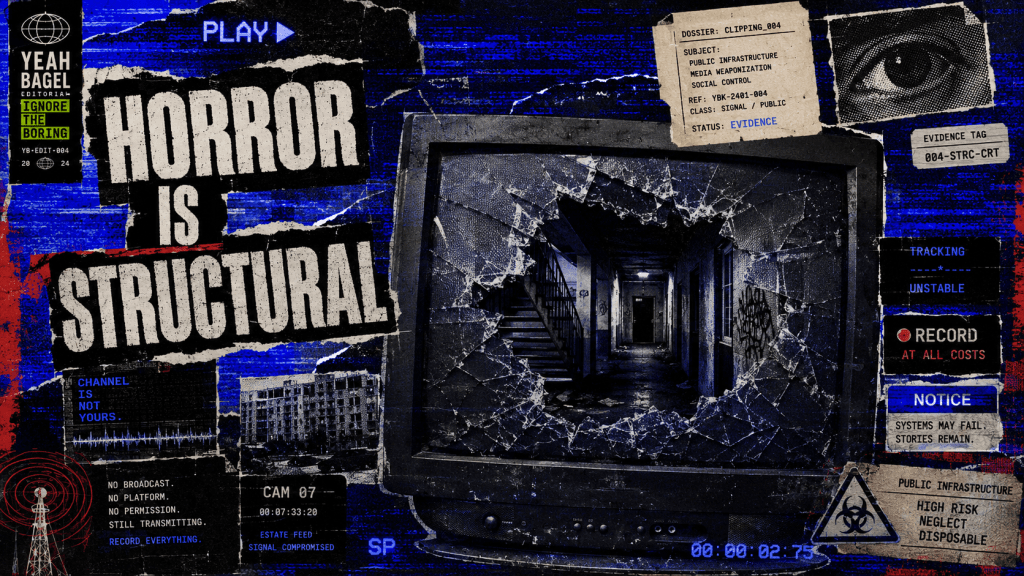
On There Existed an Addiction to Blood and Visions of Bodies Being Burned, they pushed into horrorcore not as cosplay, but as excavation. They treated the genre less like a mask and more like a crime scene. What is fear when it is racialised? What is violence when it becomes entertainment? What is the monster when the monster has funding, branding, a legal department and a nice lobby?
clipping. do not ask those questions in the voice of a lecturer. They ask them with kicks, snares, screams, jokes, pivots, guest verses, silence, panic, and the occasional sense that the track itself has noticed something moving behind you.
Then there is Splendor & Misery, the record that still feels like a transmission caught between a slave ship, a starship and a malfunctioning prayer. Its premise sounds impossible until you hear it: an Afrofuturist space narrative where escape, captivity, machinery, faith and loneliness orbit each other in the dark. It is concept rap, yes, but not in the bloated sense. It does not wear a cape and demand applause for having read a book. It understands that science fiction has always been one of Black music’s great secret engines, from Sun Ra to Parliament to Drexciya to the techno fossils buried under Detroit’s concrete pulse.
In clipping.’s hands, the spaceship is never just a spaceship.
It is the plantation with better lighting.
It is the cargo hold speaking in binary.
It is history refusing to stay buried because the future keeps digging in the same cursed place.
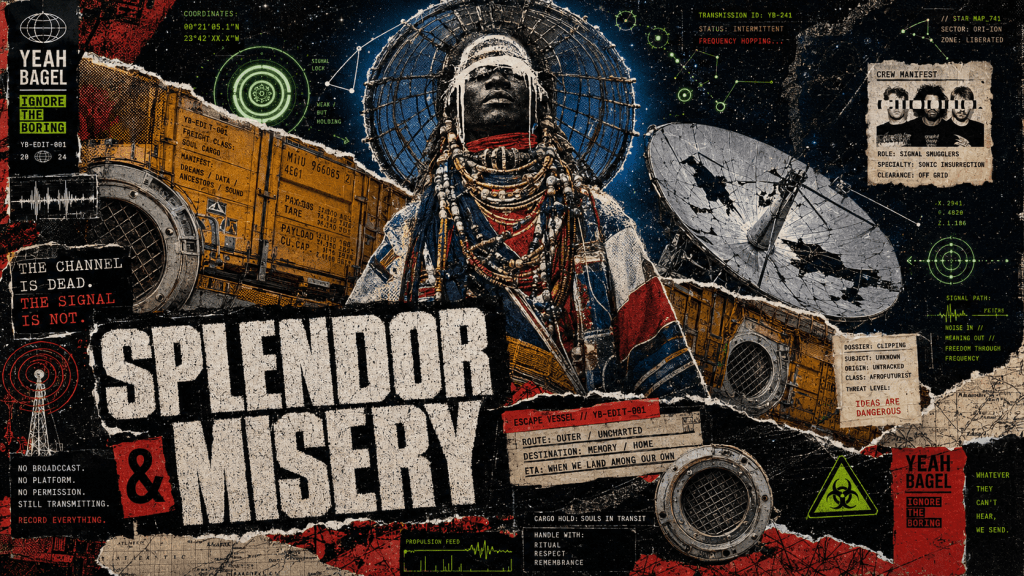
This is why the band’s relationship with science fiction feels so earned. They do not borrow the genre for decoration. They use it as an X-ray. The ray gun is pointed backwards. The cybernetics reveal the wound. The speculative frame becomes a way to talk about systems so large and brutal that plain realism sometimes bounces off them like rain on riot glass.
By the time Dead Channel Sky arrives, clipping. have shifted the scanner again. The horror gives way to cyberpunk, though “gives way” is too neat. The horror is still there. It has just learned to code.
Here the world is all hackers, soldiers, avatars, scams, mirrorshades, broken signals, recruitment language, club bodies, corporate fog. It feels less like the old internet, more like the aftertaste of whatever replaced it. The record understands that cyberpunk was never really about gadgets. The gadgets were bait. Cyberpunk was about power. Who owns the network? Who gets connected? Who becomes disposable infrastructure? Who gets to call violence innovation?
And this is where clipping. land their nastiest punch: the dystopia is not coming. It has been rolled out gradually, with improved user experience.

The old cyberpunk dream imagined neon megacities run by corporations and watched by invisible systems. We got that, only with worse clothes and more passwords. We got the black mirror, the smart doorbell, the algorithmic landlord, the battlefield livestream, the warehouse rave sponsored by despair, the personal brand, the quantified body, the platform that eats your scene and asks you to thank it for reach.
clipping. make music for that landscape.
Not music to soothe it.
Music to map it.
The songs are full of motion, but rarely freedom. Bodies move through clubs, streets, channels, systems. People run, perform, sell, hide, flex, glitch, survive. The language of rap, with its boasting, threat, reportage, comedy, detail and velocity, becomes the perfect machine for this world because rap has always known how to build futures from scraps. A turntable was never meant to become an instrument. A sampler was never meant to become a memory weapon. A block party was never meant to become a civilisation. Hip-hop has always understood hacking better than Silicon Valley, because hip-hop did it without pretending theft was genius when rich people did it later.
That is part of clipping.’s brilliance. For all their noise credentials, they do not treat hip-hop as something that needs to be elevated by experimental art. That patronising little ghost can leave through the gift shop. clipping. know the experiment was already inside the culture. The Bomb Squad were not polite. Dr. Octagon was not normal. Three 6 Mafia did not ask a conservatoire for permission to make dread bang in the boot of a car. The avant-garde does not only wear black and stand near a laptop in Berlin. Sometimes it comes chopped, looped, bass-heavy, funny as hell and wearing trainers.
clipping. simply widen the frame until the machinery becomes visible.
And then there is Diggs himself, forever threatening to become the biographical headline and forever wriggling out of that trap. Yes, he is the guy from Hamilton. Yes, he can act. Yes, he can rap with the crisp terror of a printer jam becoming sentient. But clipping. works because Diggs does not treat the records as a vanity annex to fame. He is not there to say, “Look at me.” In fact, one of the most fascinating clipping. constraints is how often the “I” disappears. The songs become inhabited by characters, narrators, victims, predators, systems, rumors, ghosts. The ego is not absent because the writing is shy. It is absent because the lens is elsewhere.
That makes the records feel unusually generous, even when they are abrasive. The listener is not being asked to admire confession. The listener is being asked to enter a world and work out where they are standing inside it.
Victim?
Witness?
Customer?
Product?
All of the above?
This is why clipping. can feel so cold and so human at once. The surfaces are metallic, but the dread is warm-blooded. The architecture is brutal, but the stories keep leaking through. There is humour in the work, too, a black-lacquered wit, because the band know the absurdity of modern life is not separate from its cruelty. The machine does not just crush you. It sends a feedback survey afterwards. It offers premium support. It changes the channel.
In the Yeah Bagel universe, where music is not background but evidence, clipping. occupy a crucial frequency. They are not here to make the underground look stylish. They are here to remind us that the underground is often where the real maps are drawn first. Before the platform notices. Before the brand deck arrives. Before some cultural vampire in clean shoes calls it “emerging.”
Their records are difficult only if you expect difficulty to mean punishment. Really, they are thrilling. They move. They bang. They stalk. They laugh. They carry the old rap pleasures inside strange new containers: flow, menace, detail, flex, story, shock, momentum. They know that a beat can be a weapon, a joke, a corridor, a trapdoor, a weather event.

clipping. make music for cities that have started dreaming in error messages.
They make music for warehouses under the drone path.
They make music for the person on the night bus scrolling through bad news while a bassline from someone else’s headphones leaks into the aisle.
They make music for anyone who suspects the apocalypse will not arrive with trumpets, but with terms and conditions.
And perhaps that is why their work matters now. Not because it predicts the future, but because it refuses the cheap comfort of pretending the future is somewhere else. clipping. are not warning us about a coming dystopia from a safe artistic balcony. They are down in the wires, taking notes while the system overheats.
The channel is dead.
The signal is not.
Ignore the boring.
Mirrorshades by clipping. appears on Yeah Bagel's Open Format Transmission 2026.02 at 00:56:50-01:00:55
