
Some songs arrive with a marketing plan. Some arrive wearing a leather coat in a video clip, carrying a rose, ready to accuse somebody of betrayal in the most immaculately unreasonable way possible.
And some arrive on a cassette from your older brother.
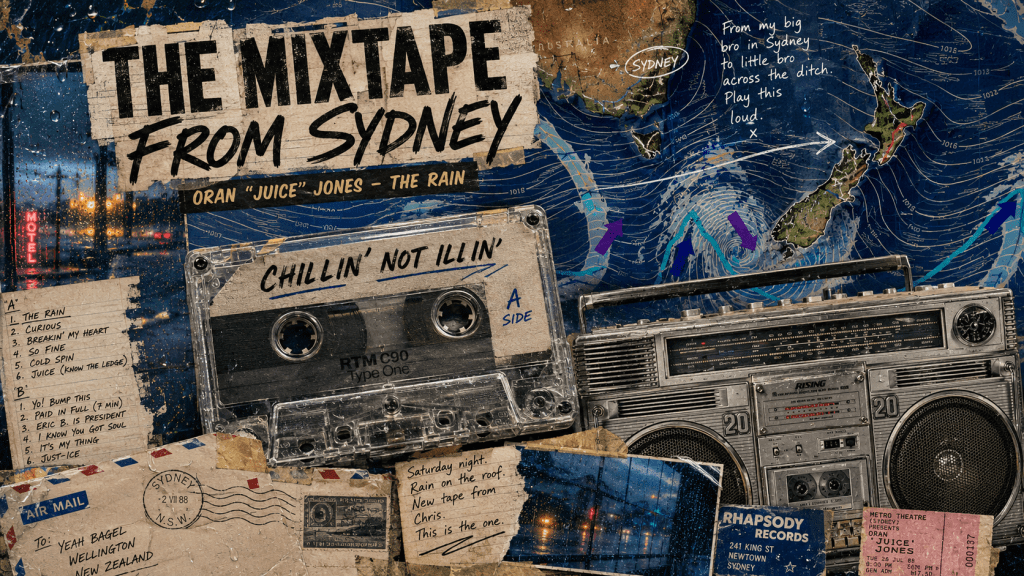
For YEAH BAGEL, Oran “Juice” Jones’ “The Rain” did not first appear as an artefact from Def Jam history, or a UK Top 10 single, or one of those mid-80s records filed under “one-hit wonder” by people who confuse brevity with insignificance. It arrived by post from Sydney, where his older brother was living at the time, on a mixtape split into teenage cosmologies. One side had its own title, its own weather system, its own invitation: CHILLIN’ NOT ILLIN’.
That was where “The Rain” lived.
Not on a streaming platform. Not recommended after twelve seconds of behavioural analysis. Not pushed by an algorithm wearing a fake leather jacket. It came through family circuitry: older brother to younger brother, Sydney to New Zealand, cassette shell to bedroom stereo, music travelling with fingerprints on it. That matters. The songs that arrive that way do not simply play. They enter the room carrying someone else’s life.
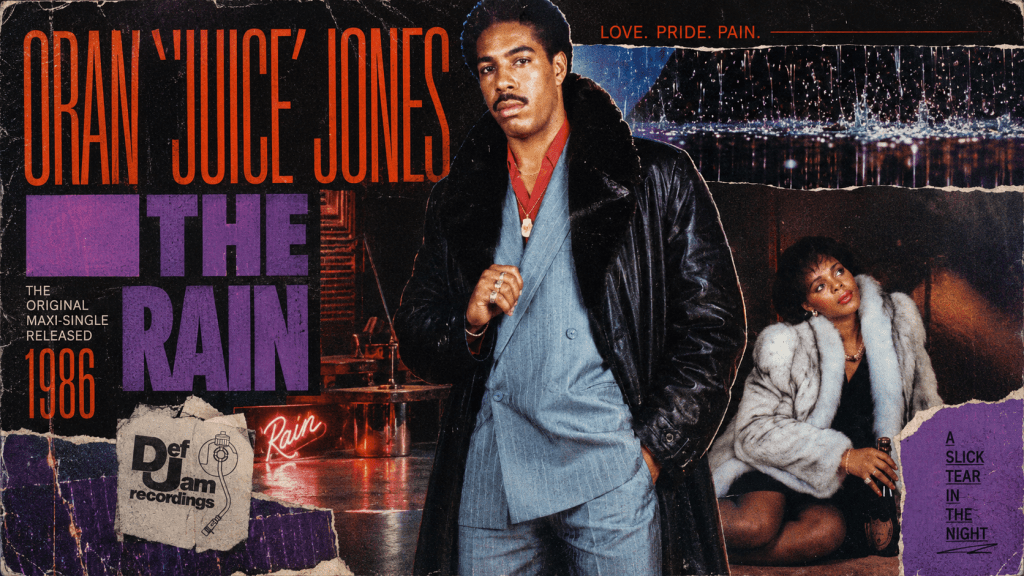
And “The Rain” was an especially strange thing to receive as a teenager. On the surface, it was smooth: polished 1986 R&B, nightclub melancholy, expensive hurt, bassline moving like a car through wet streets. Oran “Juice” Jones sang with enough elegance to make humiliation sound tailored. The record had that mid-80s gloss where every snare seemed to have been buffed by a man in sunglasses, every synth pad gleamed, every backing vocal knew exactly where the mirror was.
But then the song turned.
That is why people remember it. “The Rain” is not just a slow jam. It is a whole breakup film collapsing into a monologue. It begins as wounded romance and ends somewhere closer to street theatre, courtroom testimony, revenge fantasy and ridiculous male pride, all pacing around the same puddle. Jones does not just sing about seeing his lover with another man. He prosecutes the case. He performs the injury. He dresses heartbreak up in outrage and lets it strut.
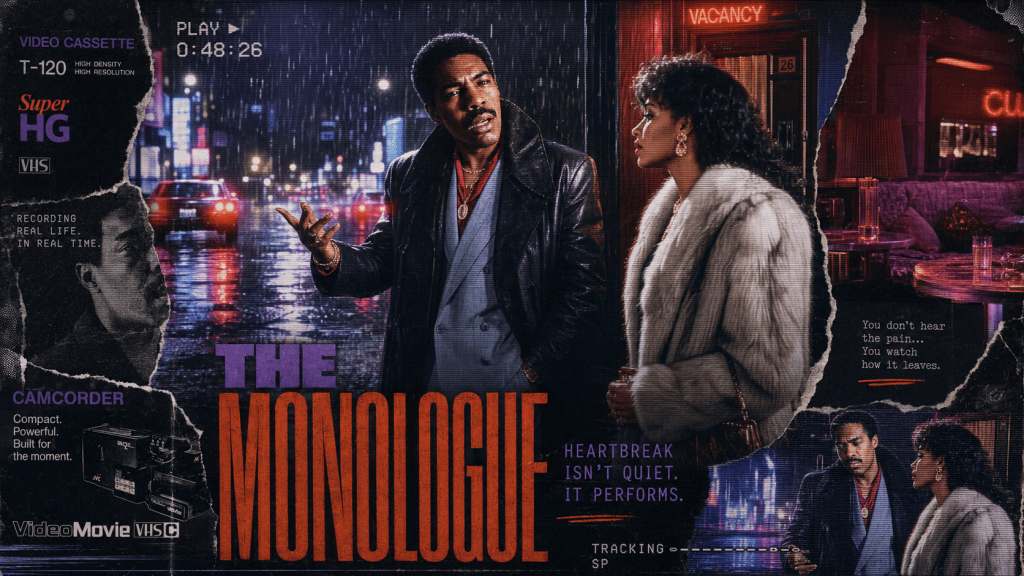
As a teenage listener, that shift must have felt almost illegal. Songs were not supposed to do that. Pop songs could be sad, dramatic, jealous, sexy, wounded, sure. But “The Rain” felt like overhearing an adult argument through a hotel wall. It was funny, but not only funny. It was theatrical, but not empty theatre. It was absurd, but absurd in the way real humiliation often is, when someone has been hurt and suddenly develops the emotional judgement of a soap opera villain with a credit card.
That is the secret of the record. It knows exactly how ridiculous it is, and it commits anyway.
Released in 1986, “The Rain” came from Jones’ debut album Juice and carried the Def Jam label into a different kind of room. Def Jam is usually remembered through rap’s early mythology: beats, battles, street corners, leather jackets, static, authority problems. “The Rain” widened that mythology. It was R&B, but not polite wallpaper R&B. It had narrative teeth. It had a spoken ending people could imitate. It had a video that looked like betrayal had been styled by a boutique owner. It had enough emotional excess to become instantly memorable and enough craft to survive the joke people sometimes try to make of it.
There is a lazy way to talk about records like this. You call it a novelty. You call it a one-hit wonder. You reduce it to the monologue, the coat, the attitude, the meme-before-memes quality of it. But that misses why “The Rain” keeps returning. Novelty records burn off. “The Rain” lingers because it captures something very specific: the moment when heartbreak stops being private and becomes performance.
It also understands the cinematic power of weather. Rain in pop music is never just rain. It is exposure. It is evidence. It is the world refusing to stay dry for your dignity. In Jones’ hands, the rain becomes witness, soundtrack, lighting rig and emotional accomplice. The whole record seems to unfold under a streetlamp at closing time, when everyone involved should go home but nobody has finished making their speech yet.
That might be why it worked so well on a mixtape called CHILLIN’ NOT ILLIN’. The title suggests ease, cool, distance, a teenage version of composure. Then here comes Oran “Juice” Jones, absolutely not composed, immaculately dressed and emotionally volcanic. The contrast is perfect. Chillin’, yes. But also pacing the room. Not illin’, perhaps. But definitely spiralling.
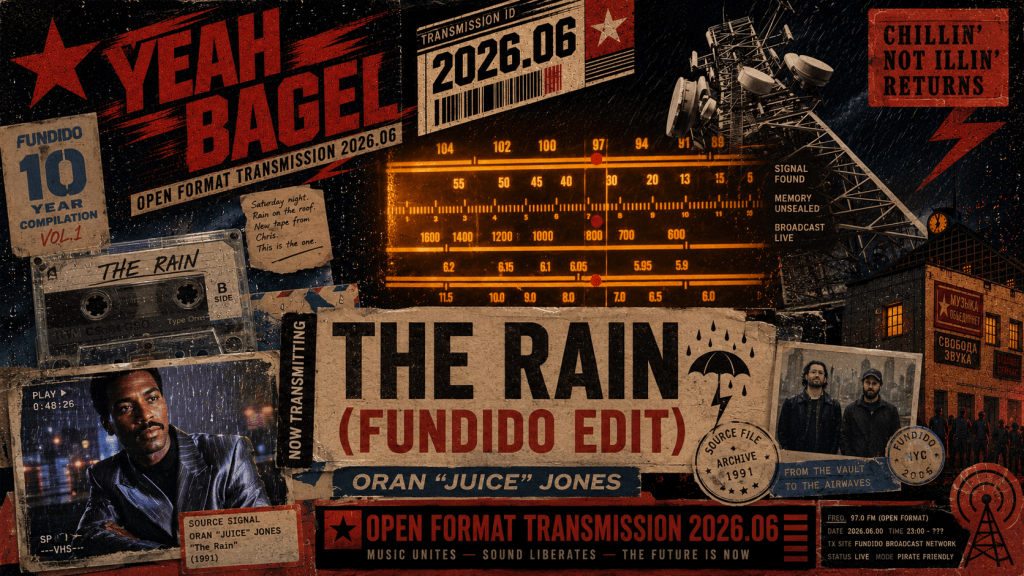
And decades later, there it is again inside YEAH BAGEL’s Open Format Transmission 2026.06, not as a museum piece but as a resurfaced signal. This time it appears as “The Rain (Fundido Edit)”, a 2026 re-rub that understands the original does not need to be rescued. It just needs the blinds opened. The edit gives the track a slightly different social life: less bedroom stereo, more backroom dancefloor; less teenage cassette discovery, more collective recognition when that familiar emotional weather rolls in.
The Fundido Edit works because it does not flatten the song’s oddness. It lets the groove breathe. It lets the old drama walk back into the room with fresh shoes. Edits can sometimes behave like renovations carried out by landlords: strip the weird corners, repaint everything beige, raise the rent. This one feels more like someone finding an old photograph in a drawer and holding it under better light. The original face remains.
That is the beautiful loop here. A song first encountered on a tape from Sydney, on the CHILLIN’ NOT ILLIN’ side, returns years later inside a transmission built from memory, instinct, edits, accidents and emotional crosswiring. The path is not linear. It is brother to brother, cassette to teenager, Def Jam to bedroom, 1986 to 2026, slow jam to edit, private memory to public broadcast.
“The Rain” survives because it is not tasteful in the small, timid sense. It is stylish, wounded, funny, excessive, petty, elegant and completely alive. It takes a romantic injury and turns it into weather. It makes melodrama useful. It reminds you that some records become part of your life not because you chose them carefully, but because someone else put them on a tape and sent them across the water.
And then, years later, you play them back.
Fundido Edit of The Rain appears at 01:10:35 on Yeah Bagel's Open Format Transmission 2026.06
