The Brothers In The Machine
Overmono have always sounded like two people trying to smuggle feeling back into machinery.
Tom and Ed Russell, brothers, producers, rave excavators, Welsh pressure-system technicians, make electronic music that understands the body before it explains itself to the head. Their tracks do not arrive waving mood boards. They flicker into the room with a pulse already running. A bassline coughs awake. A vocal shard catches the light. A drum pattern appears less like programming than weather.
That has been the Overmono trick: taking the hard architecture of UK club music and letting ghosts move through it.
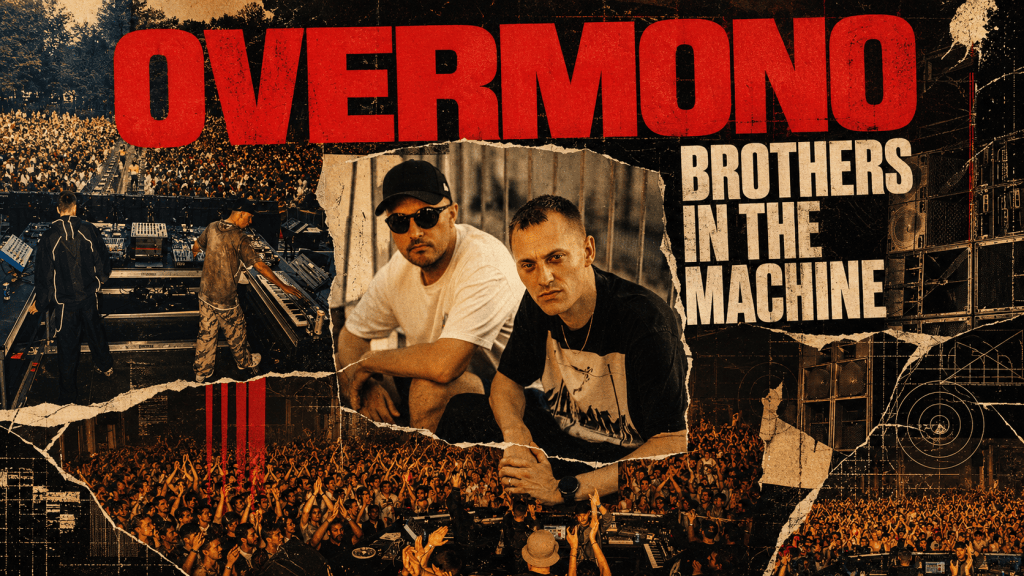
Before Overmono, the Russells had already carved their names into the underground separately. Tom, as Truss, worked the darker pressure zones of techno. Ed, as Tessela, detonated breakbeat memory with the kind of unruly precision that made “Hackney Parrot” feel less like a track and more like a flare fired into British dance music’s nervous system. Together, as Overmono, they found a third language: rave music with family resemblance, heavy engineering and bruised emotion.
By the time Good Lies arrived in 2023, Overmono had become one of those rare electronic acts who could satisfy the heads at the back of the room and the wide-eyed front-row faithful at the same time. Their music is functional, yes, but only in the way a bridge is functional. It gets you somewhere, but it also changes the view while you are crossing it.
They are not nostalgia merchants, even when they work with memory. They do not simply point at the old rave objects in the glass case. They pull them out, wire them to a generator, scratch their initials into the casing, and send them back into the present with steam coming off them.
The Edit That Became A Signal
Their version of The Streets’ “Turn The Page” is exactly that kind of reanimation.
It does not treat the original as a relic. It treats it as unfinished voltage.
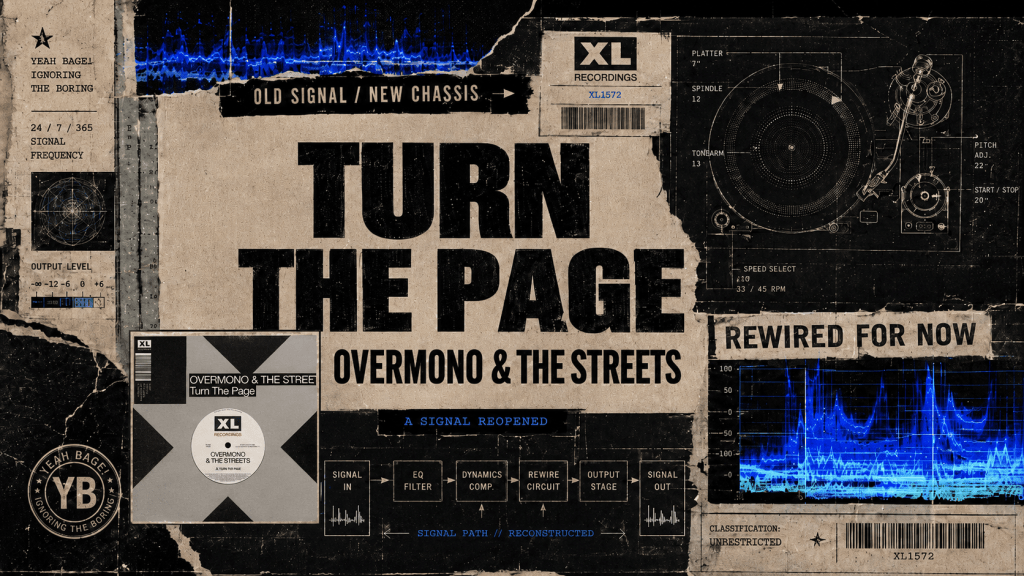
The Streets’ voice is still there, Mike Skinner’s opening declaration still carrying that strange mixture of bravado, awkwardness, mythology and pub-carpet realism. But Overmono shift the frame. They tighten the muscles around it. The strings become less cinematic curtain-raiser and more alarm system. The rhythm moves with the clipped insistence of modern UK bass pressure. The track is suddenly not just a young man announcing himself from the early 2000s. It is that same voice dragged through two decades of club floors, festival systems, cracked pavements, lost weekends and reloaded USBs.
What makes it work is restraint. Overmono do not bury Skinner beneath a fireworks display. They do not flatten the oddness out of him. They let the vocal remain slightly exposed, slightly strange, still half-boast and half-character study. Around it, they build a chassis that can survive the current moment: heavier, sharper, cleaner, but still carrying the original’s weird theatrical swagger.
The result is not a remix in the disposable sense. It is closer to a transmission repair. Same message, new aerial.
And that matters because “Turn The Page” was never an ordinary Streets track. It was an opening spell. A manifesto wearing trainers. A kitchen-sink epic that somehow made Roman imagery, pirate-radio Britain, geezer philosophy and 2-step melancholy share the same damp hallway. In Overmono’s hands, the page turns again, but the paper still smells of smoke, bus seats and bad decisions.
This is where the collaboration becomes more than a clever pairing. Overmono and The Streets are separated by generation, but joined by infrastructure. Both understand that UK music is built from unofficial routes: pirate radio, white labels, tower blocks, night buses, borrowed rooms, club systems, regional accents, half-heard phrases, people making entire worlds from whatever equipment they can get through the door.
Overmono take Skinner’s original mythology and plug it into the present tense. They make it move like it has somewhere urgent to be.
Original Pirate Material: The First Page
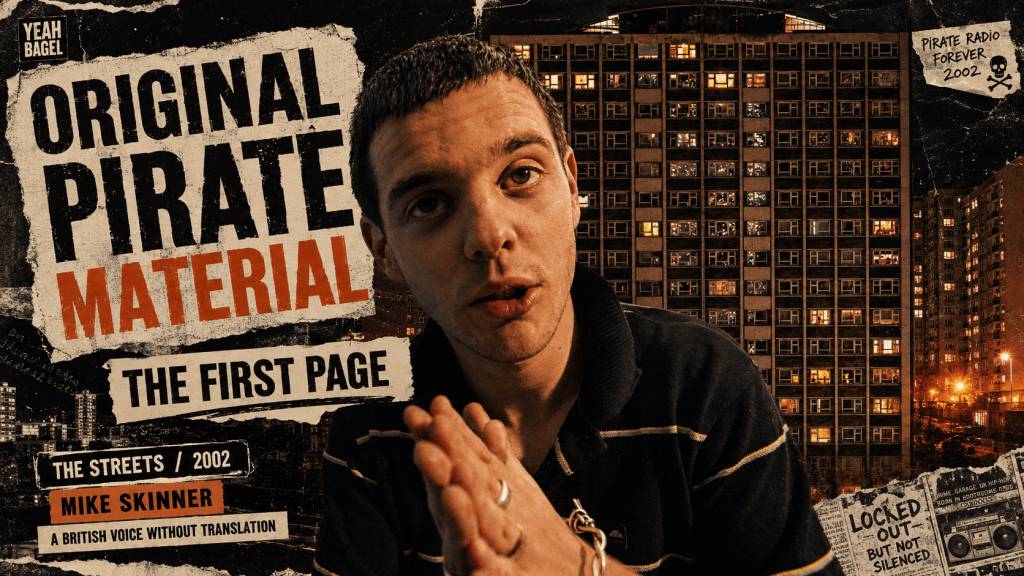
When The Streets released Original Pirate Material in 2002, it sounded like someone had finally stopped pretending British youth culture needed translation.
Mike Skinner was not rapping in an imported accent or dressing UK garage in borrowed American clothes. He was doing something both smaller and more radical: writing about British life in its own weather. Takeaways, text messages, cheap pints, comedowns, bravado, insecurity, loneliness, friendship, boredom, class anxiety, sudden beauty. The heroic and the pathetic sharing a packet of crisps.
The album arrived through Locked On and became one of the defining British debuts of the early 2000s, not because it sounded polished in the traditional sense, but because it sounded newly possible. Skinner’s production carried the influence of UK garage, hip-hop and pirate radio, but his great trick was perspective. He made the everyday feel mythic without sanding off its embarrassment.
“Turn The Page” sat at the front of that record like a gate with graffiti on it.
The strings gave it grandeur, but Skinner’s delivery undercut any simple hero pose. He sounded both monumental and local, both warrior and bloke, both narrator and unreliable witness. That contradiction became The Streets’ oxygen. Original Pirate Material did not ask Britain to look glamorous. It asked whether the flats, pubs, kerbs, clubs and corner shops were already dramatic enough.
They were.
The album helped reset what British rap-adjacent pop music could sound like. It made room for ordinary speech as poetry, for garage as storytelling architecture, for the idea that a voice could be technically awkward and emotionally exact at the same time. It did not emerge from nowhere, but it caught a moment when pirate-radio energy, post-rave exhaustion and working-class narration were ready to be heard in a new formation.
That is why “Turn The Page” still has charge. It is not just a track from a classic album. It is a threshold. You hear it and you hear a door opening, not politely, but with a shoulder.
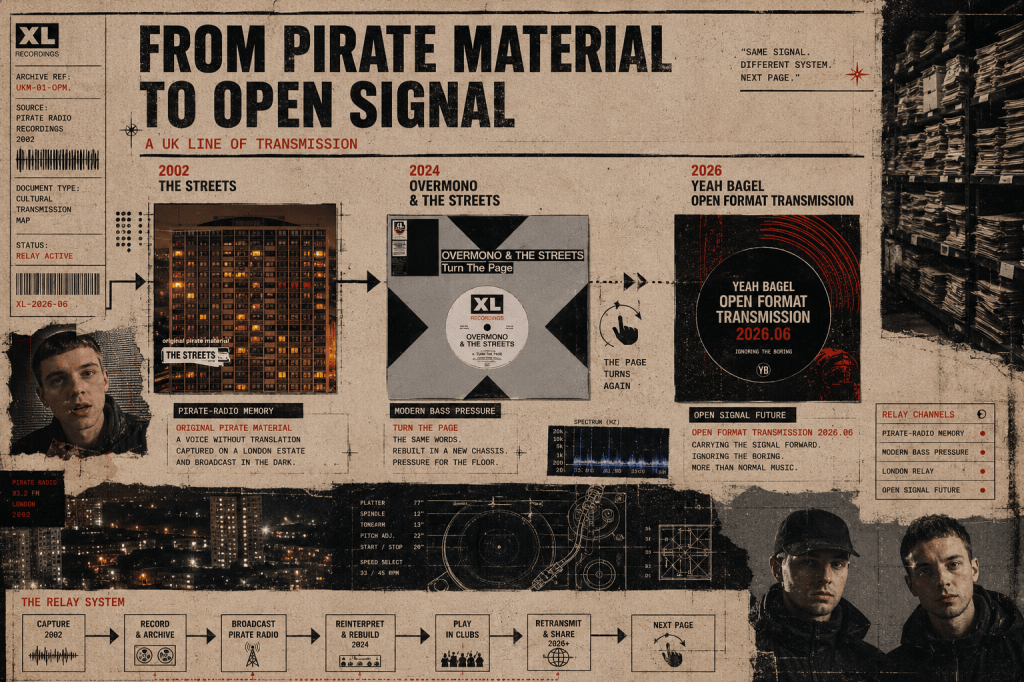
The Page Turns On Yeah Bagel
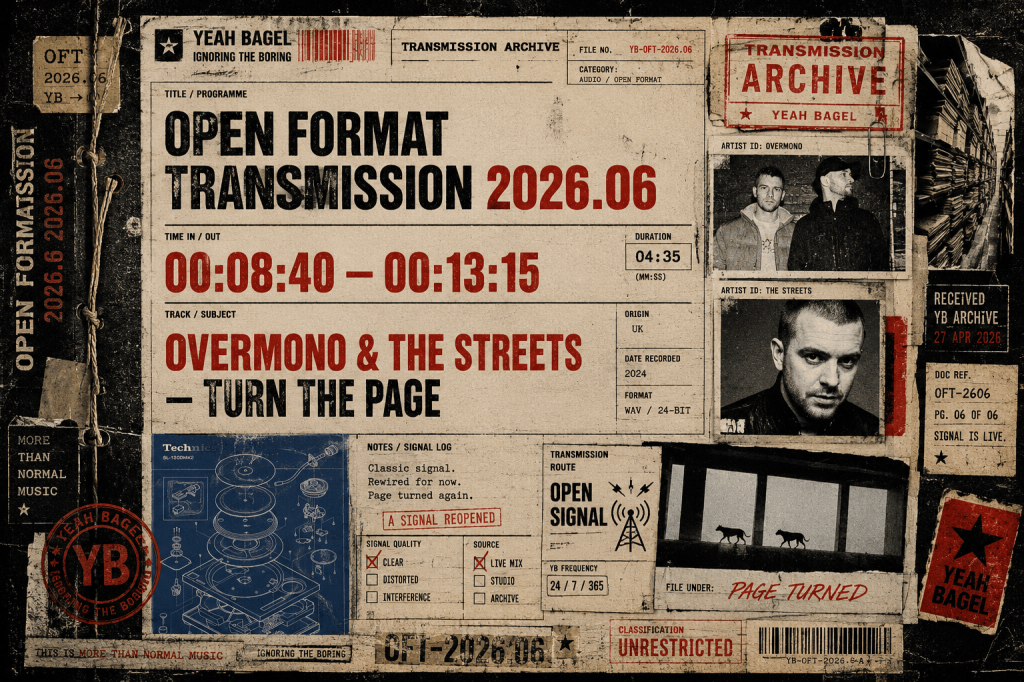
Overmono’s “Turn The Page” lands on Open Format Transmission 2026.06 like a fuse being lit early in the journey.
At 00:08:40–00:13:15, it becomes part of the wider Yeah Bagel logic: old signals refusing to stay old, new club pressure finding ancestry in unexpected corners, British music history treated not as a museum wing but as usable equipment. The placement is crucial. Early enough to announce intent. Deep enough to start pulling the mix into its own weather.
Here, The Streets are not being archived. Overmono are not being filed under “festival electronics” and left there to gather algorithm dust. The track becomes a bridge between pirate material and open format behaviour, between 2002’s council-block mythology and 2026’s restless transmission culture.
That is the pulse of it.
A page turned once in 2002.
Overmono turn it again.
Yeah Bagel catches the paper mid-air.
And for four minutes and thirty-five seconds, the signal does what the best signals do: it refuses to behave like history.